



A plot can look perfect on site: levelled, fenced, with a signboard and a glossy brochure. None of that tells you whether the layout was legally approved. In Maharashtra, that question decides whether you can get a building plan sanctioned, a bank loan processed and a clean resale later.
This guide explains the layout sanction meaning in plain language, who approves layouts in Nagpur, which documents to check and how to verify each one using official sources. It is written for first-time plot buyers and families planning to build. It is general information, not legal advice.
Table of Contents
What Is the Layout Sanction Meaning?
A layout is a plan that divides a larger piece of land into individual plots. It shows plot numbers, dimensions, internal roads, open spaces and amenity areas. Layout Sanction Meaning A sanctioned layout is one that the competent planning authority has formally approved under the law.
Here is a simple example. A developer buys ten acres on the outskirts of Nagpur and sells 80 plots. In a sanctioned layout, an authority has approved a drawing that fixes every plot number, its size, the road widths and the open space. The plot you buy matches that drawing. In an unsanctioned layout, the “layout” is only a private map prepared by the seller. Roads may be too narrow, open space may be missing and the authority may later refuse to sanction your house plan.
One point to remember throughout: layout sanction is a planning approval. It does not, by itself, prove that the seller owns the land.
What Does Layout Sanction Mean in Maharashtra? Layout Sanction Meaning
Layout Sanction Meaning In Maharashtra, land development is governed mainly by the Maharashtra Regional and Town Planning (MRTP) Act, 1966. Under this framework, a planning authority prepares plans that decide how land may be used. Development, which includes dividing land into plots, needs the authority’s permission. Development control regulations then set rules on plot sizes, road widths and open space.
Layout approval is often a staged process. Reports on NMRDA’s procedure describe a provisional approval followed by a final approval once the developer meets the conditions. Another report says only a portion of the plots is released for sale initially, with the rest following the authority’s process. So “approved” can mean different stages. Always ask whether the approval is provisional or final, and whether the plot you want has been released.
Requirements are not identical for every layout. They depend on the location, the jurisdiction and the nature of the development. Treat any single checklist, including this one, as a starting point.
Which Authorities Approve Layouts in Nagpur? Layout Sanction Meaning.
There is no single answer for all of Nagpur. The competent authority depends on where the land sits.
| Authority | Where it generally applies | What to ask for |
|---|---|---|
| NMRDA (Nagpur Metropolitan Region Development Authority) | The Nagpur Metropolitan Region, about 3,567 sq km, where it is the planning authority | NMRDA sanction order and approved plan |
| NMC (Nagpur Municipal Corporation) | Within municipal limits, where NMC acts as a planning authority | NMC layout or building permission records |
| NIT (Nagpur Improvement Trust) | Certain areas and schemes in the city, where it is described as a local planning authority | NIT approval or regularisation papers, where relevant |
| Other competent authorities | Land outside these areas, which may fall under a different planning arrangement | Written confirmation from the District Town Planning office or the relevant authority |
This is why “NMRDA approved” cannot be assumed for every plot. Jurisdiction can also change. In one documented case, a village was brought under NMRDA only in January 2018, after an earlier layout had been prepared under a different arrangement.
NMRDA vs NMC in practice. If your land is inside municipal limits, NMC (or NIT, in its areas) is the relevant authority. If it is in the wider region beyond, NMRDA is typically the one. In both cases, layout sanction is separate from the building plan sanction you need later to construct a house.
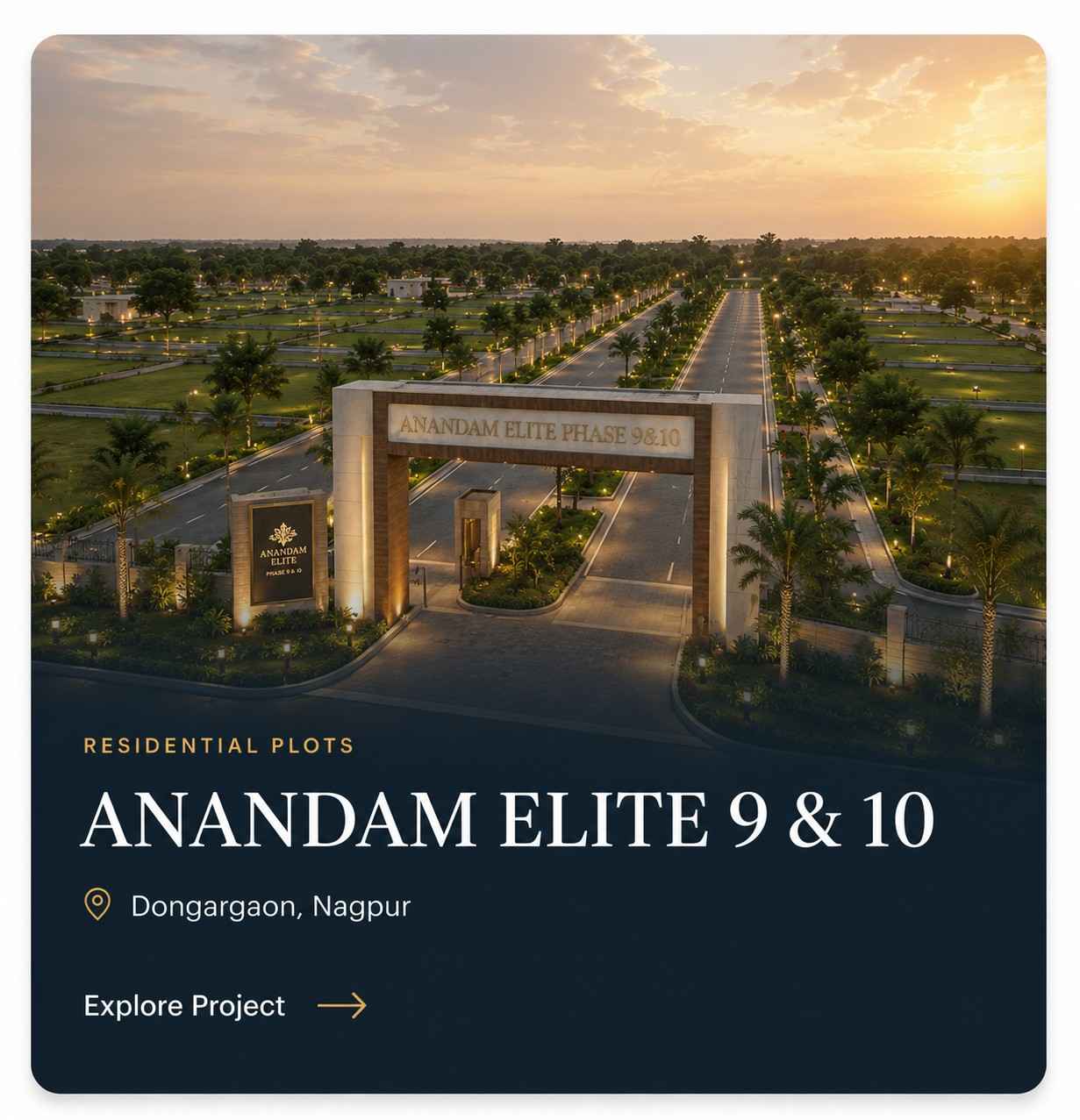
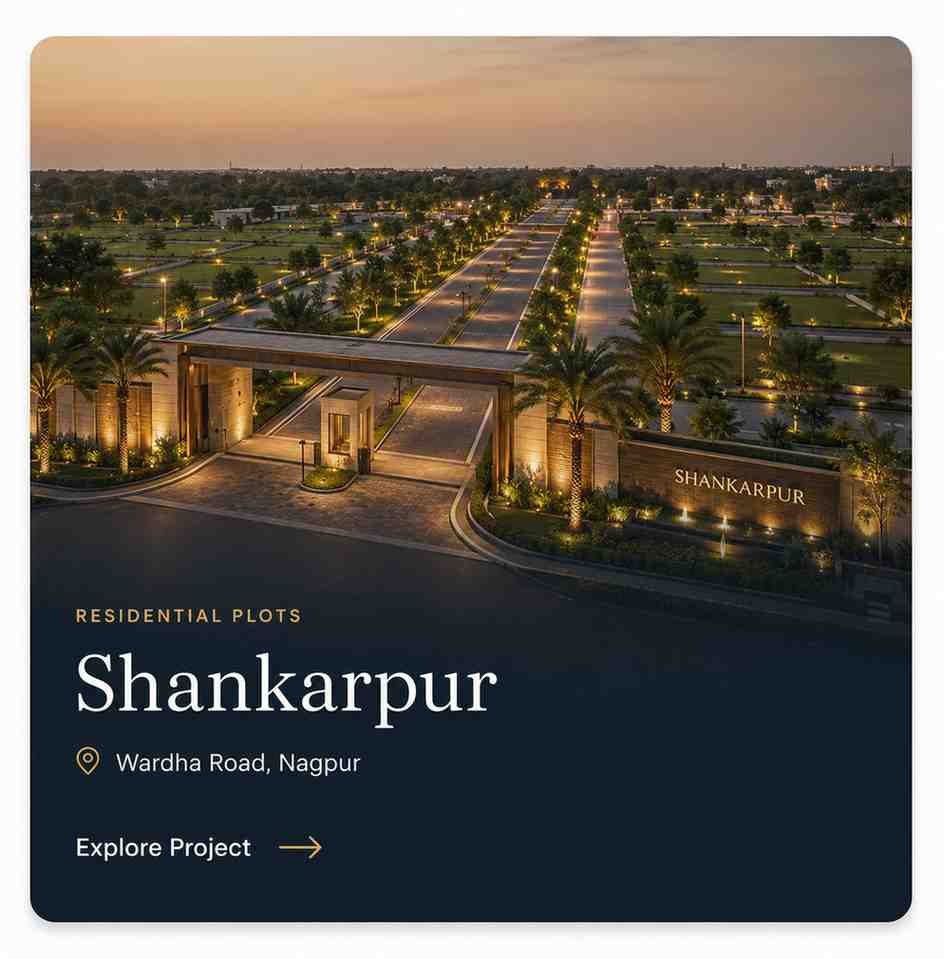
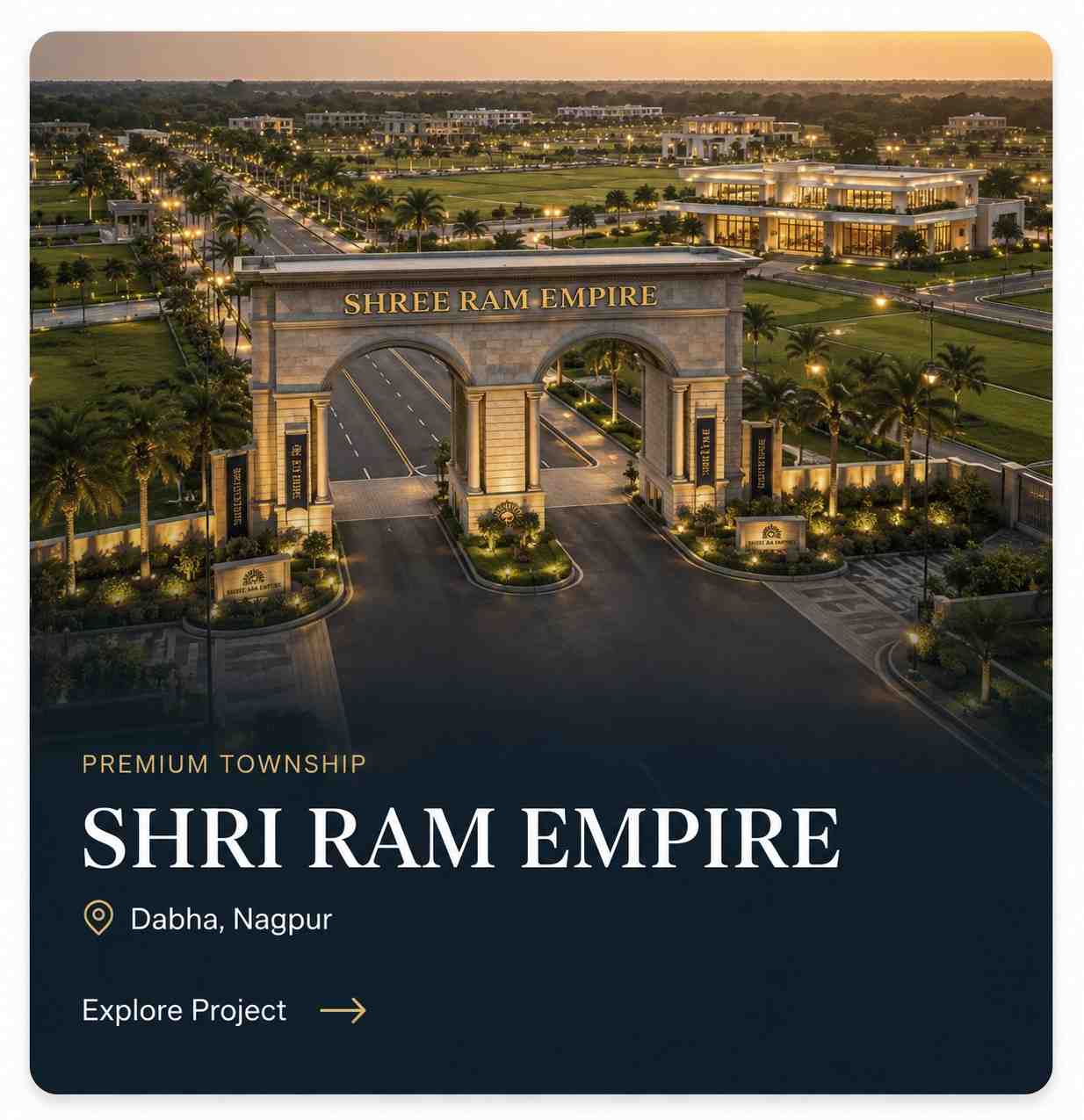
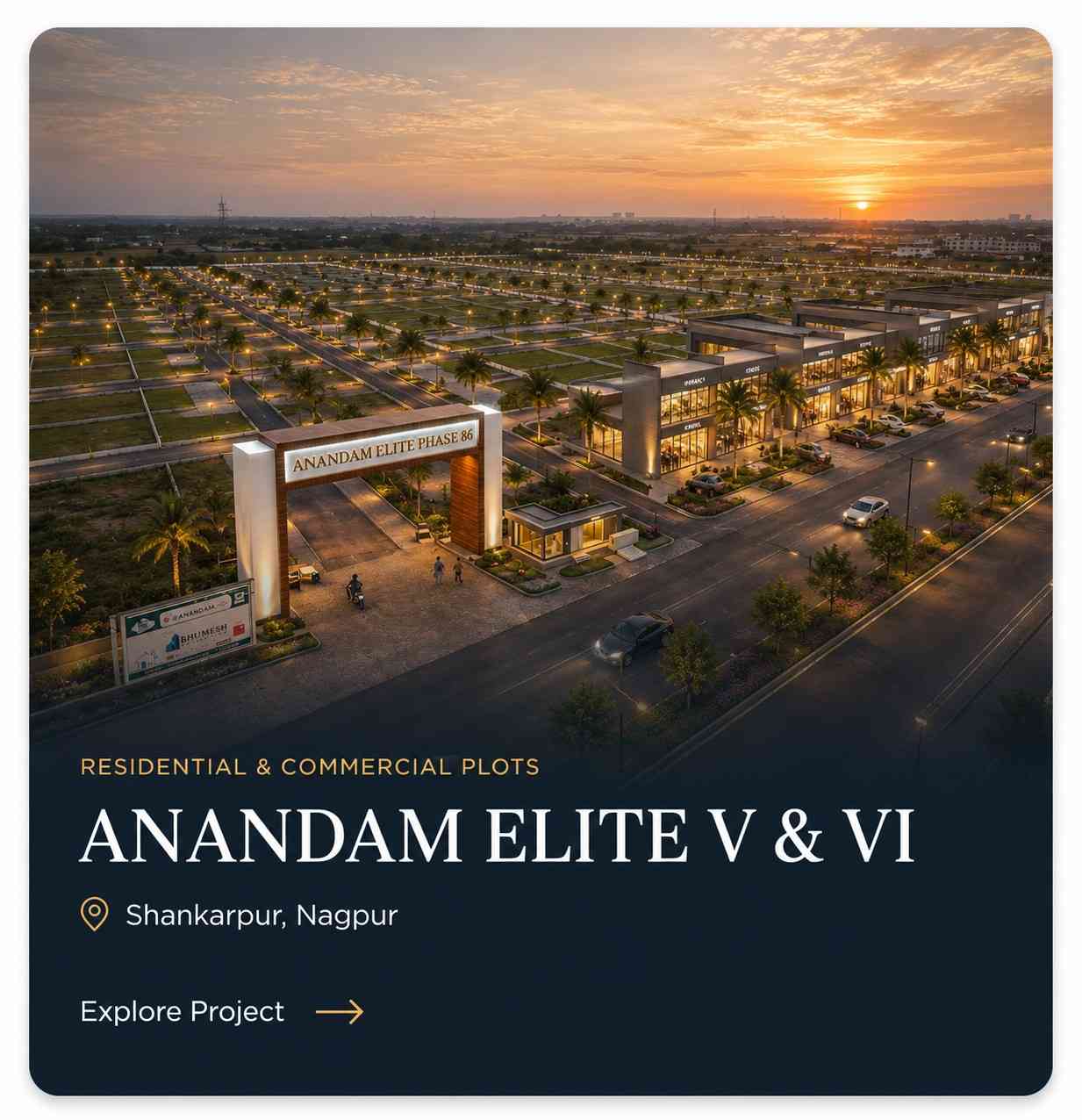
Bhumesh Realtors’ project corridors, such as Wardha Road, Shankarpur, Dongargaon, Gumgaon and Isasani, are good examples of why you should confirm jurisdiction survey number by survey number, rather than by locality name.
Documents to Check Before Buying a Plot
Each document answers a different question. None answers all of them.
| Document | What it establishes | What it does not establish |
|---|---|---|
| Sanctioned layout plan (stamped and signed by the authority) | Approved plot numbers, sizes, roads and open spaces | That the seller owns your plot, or that it is free of disputes |
| Layout approval order / permission | Which authority approved, on what date, and under what conditions | That the conditions have since been fulfilled |
| Land ownership documents (sale deeds, mutation entries, partition or power-of-attorney papers) | The chain through which the seller claims ownership | Anything about planning approval |
| 7/12 extract, where applicable | Revenue-record details such as land holder, area and recorded rights or loans | Conclusive title. It is a revenue record, and may lag behind recent changes |
| Property card, where applicable | Record of rights for surveyed urban properties (it is used in urban areas instead of the 7/12) | Planning approval or a clean title |
| NA permission or land-use records | Whether the land’s use has been changed from agricultural to non-agricultural | That the layout is sanctioned, or that title is clear |
| Encumbrance and title verification | Registered transactions and mortgages, plus a lawyer’s opinion on the ownership chain | Unregistered claims, court cases or revenue disputes, unless your lawyer searches for them |
| MahaRERA registration, where applicable | The promoter has registered the project and disclosed approvals and timelines | That the land title is clear |
A note on NA permission. Maharashtra changed this area recently. Under the Maharashtra Land Revenue Code (Second Amendment) Act, 2025, notified on 31 December 2025, a separate Collector’s NA permission or sanad is no longer required where the non-agricultural use is permissible under the applicable Development Plan or Regional Plan. The planning authority’s development permission now carries more weight, with a one-time conversion premium replacing the annual assessment. Older layouts may still carry earlier NA orders, so ask your lawyer which regime applies to your plot.
A note on RERA. Projects above roughly 500 sq m of land or eight units generally need MahaRERA registration, and plotted developments are covered. Smaller projects may be exempt. A MahaRERA circular also treats the final layout approval as the commencement certificate for plotted projects. Even so, registration is not a title certificate.
How to Verify a Sanctioned Layout in Nagpur Layout Sanction Meaning
- Identify the competent planning authority. Note the village, taluka and survey or gat number from the seller’s documents. Then confirm in writing with NMRDA, NMC, NIT or the District Town Planning office that this land falls under the authority named in the approval.
- Obtain the approved layout plan and approval order. Ask the developer for certified copies. For an independent copy, apply to the issuing authority directly. An application under the Right to Information Act, 2005 is another option.
- Match plot number, dimensions and location. Compare your plot number, area and boundaries in the draft sale deed with the sanctioned plan. Make sure your plot is not part of a road, open space or amenity area. A licensed surveyor can measure it on site.
- Verify the approval with the issuing authority. Confirm the file or order number, the date, any conditions, validity and whether the approval is provisional or final. We could not confirm a public online list of approved NMRDA layouts, so do not rely on screenshots or forwarded PDFs. Ask the authority’s office for written confirmation.
- Check land records. Use the Mahabhulekh portal to view the 7/12 extract or property card, and the digitally signed records service for copies suitable for official use. Check the owner’s name, area, recorded rights and recent mutations. Then use the IGR Maharashtra portal to search registered documents and the encumbrance position.
- Verify MahaRERA registration where applicable. On the MahaRERA website, search the Registered Projects section by registration number, project name or promoter. Confirm that the project name, location and plot details match what you were shown.
- Get independent legal due diligence. Ask a property lawyer to examine the title chain, search for litigation and review the draft agreement before you pay a booking amount.
Sanctioned Layout vs Unauthorized Layout
| Parameter | Sanctioned layout | Unauthorized layout |
|---|---|---|
| Approval status | Approved by the competent planning authority, provisionally or finally | No valid approval, or approval that does not cover the plot |
| Documentation | Approved plan, approval order and development records available | Private plan, stamp-paper agreements or possession letters |
| Legal risks | Lower planning risk, though title must still be verified | Risk of action by the authority, disputes and difficulty in resale |
| Construction permissions | Building plan sanction is generally possible if rules are met | Sanction may be refused until the plot is regularised |
| Buyer precautions | Verify jurisdiction, plot match, title and development status | Seek legal advice before committing; do not assume regularisation will follow |
Maharashtra’s Gunthewari law allows some unauthorised plots to be regularised, but with limits. The 2021 amendment covered developments existing as on 31 December 2020, and regularisation does not by itself confer title. In NMRDA’s region, reports say about 1.5 lakh applicants were still awaiting regularisation in 2024. Buying an unauthorised plot in the hope of later regularisation is a gamble.
Common Mistakes Buyers Should Avoid
- Trusting the brochure. “NMRDA approved” on a hoarding is a claim. The approval order and plan are the proof.
- Not matching the plot number to the sanctioned plan. A genuine layout can still have a plot that sits on a road or open space.
- Assuming one authority covers all of Nagpur. Confirm jurisdiction for your survey number.
- Treating a 7/12 extract or NA record as proof of layout approval. They are different records that answer different questions.
- Skipping the encumbrance and title search. Sanction does not protect you from a seller who does not own the land.
- Believing registration makes a plot legal. Buyers in the NMRDA region registered plots and later struggled to get building plans sanctioned.
- Ignoring provisional versus final approval. Check what stage the layout is at and whether the plot is released.
- Paying a booking amount before verification. Settle documents first, and get every promise in writing.
- Skipping MahaRERA for a project that needs it. Check the promoter name and registration details.
Frequently Asked Questions
1. What is a sanctioned layout? Layout Sanction Meaning It is a plan dividing land into plots that the competent planning authority has formally approved. It fixes plot sizes, roads and open spaces.
2. Is NMRDA approval necessary for every plot in Nagpur? No. NMRDA is the planning authority for the Nagpur Metropolitan Region. Land inside municipal limits is handled by NMC (or NIT in certain areas), and other land may fall under a different authority. Confirm jurisdiction for your survey number.
3. How do I check whether a layout is approved? Layout Sanction Meaning Get the approval order and sanctioned plan, match your plot to them, and confirm the details in writing with the issuing authority. Then check land records and MahaRERA where applicable.
4. Is a sanctioned layout the same as an NA plot? No. Layout sanction is a planning approval, while NA relates to land-use classification. Following recent amendments, a separate Collector’s NA permission is no longer needed where the use is permissible under the applicable plan. Ask your lawyer how this applies to your plot.
5. Can I purchase a plot without layout sanction? A sale may be possible in practice, but it carries real risk. You may struggle to get a building plan or bank loan, and regularisation is limited and slow. Take legal advice first.
6. Does RERA registration mean the land title is clear? No. MahaRERA registration shows the project is registered and its details are disclosed. Title still needs separate verification by a lawyer.
7. What documents should I verify before plot registration? The sanctioned layout plan and approval order, ownership and title documents, 7/12 extract or property card, land-use records, encumbrance search, MahaRERA registration where applicable, and the draft sale deed.
Conclusion
The layout sanction meaning is simple, Layout Sanction Meaning but its consequences are not. A sanctioned layout tells you the plot was planned and approved by the competent authority. It does not tell you the seller owns it, that conditions are complete or that the land is free of disputes. Each of those needs its own check: the approval order, land records, encumbrance search, MahaRERA registration where applicable and, above all, an independent lawyer’s opinion.
Bhumesh Realtors is a real estate company in Nagpur, working since 2018, that helps buyers explore plots in layouts presented as NMRDA-approved and MahaRERA-registered, with bank loan assistance of up to 90% subject to bank and buyer eligibility. The company says it has sold over 3,000 plots. Whichever developer you choose, ask for the documents and verify them yourself.
Contact Bhumesh Realtors to explore verified plot opportunities in Nagpur and book a site visit.
Disclaimer: This article is for general awareness and is not legal advice. Rules and procedures change, and requirements vary by location and jurisdiction. Confirm details with the competent authority and a qualified property lawyer.