






Cost of Buying Plot in Nagpur sounds simple on paper. You see a price per square foot, you do the math, and you think you know exactly what you’ll pay. Then registration day arrives, and suddenly there’s stamp duty, a registration fee, legal charges, development charges, and two or three costs nobody mentioned during the site visit.
This happens to almost every first-time buyer. Not because sellers are hiding anything, but because the “plot price” quoted in conversation is rarely the same as the “total cost” you’ll actually pay to own that land, legally and completely.
If you’re planning to buy a residential plot around Nagpur — whether on Wardha Road, in Shankarpur, Dongargaon, Dabha, Pipla, Isasani, Gumgaon, or Waranga — this guide walks you through every rupee involved. By the end, you’ll be able to build your own realistic budget instead of guessing, and you’ll know exactly which questions to ask before you sign anything.
Table of Contents
Why Buyers Almost Always Underestimate the Real Cost of Buying Plot in Nagpur
Ask ten plot buyers in Nagpur what they paid, and most will quote you the base price only — the number that was negotiated with the seller or developer. Very few include stamp duty, registration, legal fees, or the small charges that show up later.
There are three reasons this keeps happening.
First, the base price is the only number that gets marketed. Brochures, WhatsApp forwards, and broker conversations lead with the per-square-foot rate because it’s the most attractive figure. Nobody advertises “plus 7% stamp duty and other charges” in bold.
Second, government charges feel abstract until you’re at the sub-registrar’s office. Stamp duty and registration fees are calculated on either the agreement value or the government’s Ready Reckoner rate, whichever is higher. Many buyers don’t realise this until the final bill is presented, and by then there’s little room to renegotiate.
Third, “hidden” costs aren’t really hidden — they’re just not asked about. Development charges, NA (non-agricultural) conversion status, boundary demarcation, and society or maintenance charges are all discoverable in advance. Buyers who don’t ask upfront end up discovering them at the worst possible time: after they’ve already committed.
The fix is straightforward. Once you know every cost head in advance, you can ask for it in writing before you pay a single rupee in token amount.
The Complete Breakdown: Every Cost Involved in Buying a Plot
Let’s go through each cost component one at a time, in the order you’ll actually encounter them.
1. Base Plot Price
This is the price you negotiate for the land itself, usually quoted per square foot or per square metre. In and around Nagpur, this rate varies significantly by location.
Areas closer to the city and along established roads like Wardha Road command a premium because of existing infrastructure, connectivity, and demand. Emerging pockets such as Dabha, Pipla, Isasani, and Waranga tend to be priced lower today, which is exactly why investors are watching them — the entry cost is lower and the appreciation potential, driven by Nagpur’s expanding road network and NMRDA-led development, is higher.
A practical tip: always ask for the rate per square foot and the total saleable area in writing before you calculate anything else. Some layouts quote based on gross area, which includes internal roads and common spaces, while your actual usable plot may be smaller.
2. Stamp Duty
Stamp duty is a state government tax paid to make your sale deed legally valid. Without it, your document has no standing in a court of law, no matter how much you paid for the land.
In Maharashtra, stamp duty is calculated on whichever is higher: the agreement value you’ve negotiated, or the government’s Ready Reckoner rate for that locality. This detail matters a lot — if you negotiate a great deal below the Ready Reckoner rate, you still pay stamp duty based on the higher government-assessed value, not your actual purchase price.
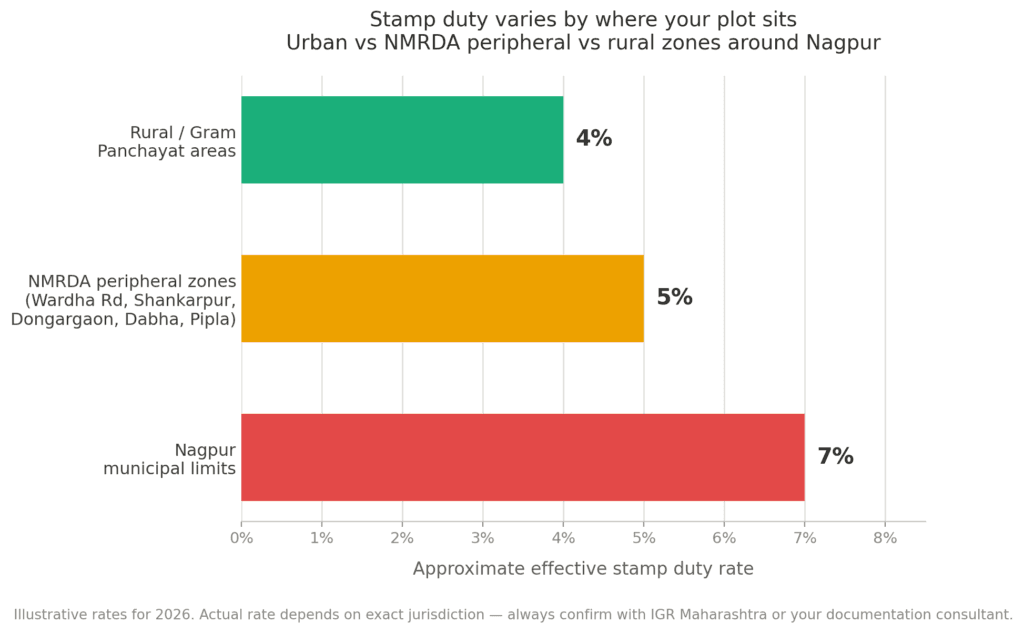
Rates vary by jurisdiction. <cite index=”5-1,7-1″>Areas within municipal corporation limits like Nagpur city attract a higher effective rate because of Metro Cess and Local Body Tax layered on top of the base duty, while rural Gram Panchayat areas outside municipal limits attract a lower base rate, sometimes with an additional rural cess in place of the metro cess.</cite> <cite index=”8-1″>A woman buyer registering a residential property in her sole name typically receives about a 1% concession on the applicable stamp duty rate, though this benefit does not extend to joint ownership with a male co-owner or to commercial property.</cite>
Because most residential plots around Nagpur — Shankarpur, Dongargaon, Dabha, Pipla — fall in NMRDA-governed peripheral zones rather than the core municipal corporation area, buyers there generally see a lower effective stamp duty rate than someone buying inside central Nagpur. However, the exact bracket your plot falls into depends on its specific jurisdiction, so it’s worth confirming with your registration consultant or the developer before you assume a number.
3. Registration Charges
Registration is separate from stamp duty and is the fee paid to the Sub-Registrar’s office to officially record your ownership in government records. <cite index=”4-1,7-1″>In Maharashtra, registration charges are generally 1% of the property’s market value or Ready Reckoner value, whichever is higher, capped at ₹30,000 for properties valued above ₹30 lakh. For properties valued at or below ₹30 lakh, the fee is calculated as 1% of the higher of the two values.</cite>
This cap works in your favour once your plot crosses the ₹30 lakh mark — your registration fee doesn’t keep rising with property value beyond that point.
4. Legal Verification and Documentation Charges
This is the cost that protects you the most, yet gets skipped the most often. Legal verification includes checking the seller’s title, confirming there are no pending litigations, verifying the 7/12 extract (or property card), confirmation of NA (non-agricultural) conversion status, and checking that the layout has valid approvals.
A property lawyer or documentation consultant typically charges a fixed professional fee for this due diligence, separate from government charges. It’s a small cost compared to what you stand to lose if a title dispute surfaces after you’ve paid the full amount.
This is exactly why buying only RERA-approved and NMRDA-approved layouts matters. When a project is already RERA registered and NMRDA sanctioned, a large part of this legal verification is already done at the project level — the layout’s title, land-use permissions, and approvals have already been scrutinised by the authority before sanction. That doesn’t remove the need for your own basic checks, but it significantly lowers your risk compared to an unapproved or informally subdivided plot.
5. Development Charges
Development charges cover the cost of internal roads, boundary walls, water supply lines, electricity infrastructure, stormwater drains, and common area development within the layout. Some developers include this in the quoted plot price; others list it separately.
Always ask explicitly: “Is development charge included in this per-square-foot rate, or is it additional?” This single question avoids one of the most common billing surprises buyers face at the time of final payment.
6. Loan Processing Charges
If you’re financing your purchase, banks typically charge a processing fee, usually a percentage of the loan amount, along with charges for legal and technical valuation of the property. Since plot loans are assessed slightly differently from home loans — banks want to confirm the plot has clear title, NA conversion, and approved layout status before sanctioning — having RERA and NMRDA approval in place genuinely speeds up this process and reduces back-and-forth queries from the bank’s legal team.
With up to 90% bank loan assistance available on approved projects, it helps to get a rough Letter of Intent from your bank early, so you know your EMI and processing cost before you commit your token amount.
7. Government Charges (GST, Cess, and Other Levies)
Beyond stamp duty and registration, there can be additional smaller government levies depending on the nature of the transaction — for instance, cess amounts in certain notified zones, or GST if applicable to specific development or construction-linked components of the deal. These vary by project structure, so ask your developer for an itemised quote rather than assuming a flat number.
8. Hidden Costs Buyers Often Miss
These are the costs that don’t show up in the brochure but absolutely show up in your final expense sheet:
- Boundary demarcation and fencing — confirming your exact plot boundaries on the ground, especially important in layouts adjoining agricultural land.
- NA conversion charges — if the land wasn’t already converted from agricultural to non-agricultural use, this cost and process falls on the buyer in some transactions.
- Society formation or association charges — a one-time contribution toward forming the plot owners’ association that will maintain common areas.
- Electricity and water connection charges — individual meter connection costs are often separate from the development charge.
- Brokerage, if you’re going through an independent agent rather than buying directly from the developer.
Cost of Buying Plot in Nagpur None of these individually are large, but together they can add several percentage points to your total outlay if you don’t budget for them upfront.
9. Maintenance Charges
Once your plot is registered, most managed layouts levy an annual or monthly maintenance charge for the upkeep of internal roads, street lighting, common landscaping, and security. This is usually modest but recurring, so factor it into your long-term ownership cost, not just your one-time purchase budget.
10. Utility Charges
Separate from development charges, individual utility connections — electricity meter installation, water connection, and sometimes a security deposit to the utility provider — are typically paid directly by the buyer at the time of construction or immediately after registration.
Sample Cost Table: Estimating Your Total Budget
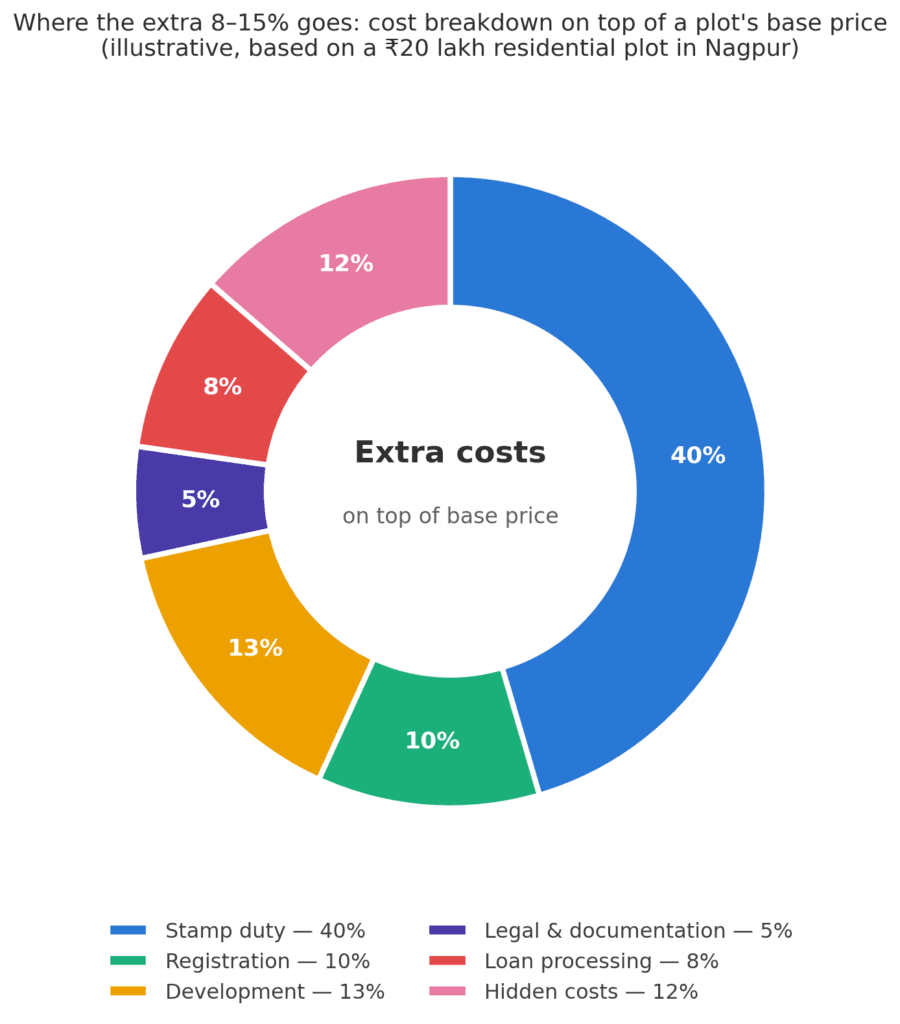
Here’s how these costs typically stack up for a residential plot. This is an illustrative example, not a fixed quote — always confirm actual figures with your consultant or developer, since rates depend on locality and jurisdiction.
| Cost Head | Illustrative Basis | Approx. Amount (on a ₹20 lakh plot) |
|---|---|---|
| Base Plot Price | Negotiated / market rate | ₹20,00,000 |
| Stamp Duty | ~4–6% of higher of agreement or Ready Reckoner value | ₹80,000 – ₹1,20,000 |
| Registration Charges | 1% of value, capped at ₹30,000 | ₹20,000 – ₹30,000 |
| Legal Verification & Documentation | Fixed professional fee | ₹8,000 – ₹15,000 |
| Development Charges | If not included in base price | ₹15,000 – ₹40,000 |
| Loan Processing (if financed) | % of loan amount | ₹10,000 – ₹25,000 |
| Hidden Costs (demarcation, connections, society) | Varies by layout | ₹15,000 – ₹35,000 |
| Estimated Total | ₹21.5 – ₹23.5 lakh |
Notice the gap: on a ₹20 lakh base price, your real cost of ownership can land 8–15% higher once every component is included. That gap is exactly what most buyers fail to plan for.
A Practical Example: Two Buyers, Two Outcomes
Consider two buyers, both looking at a 2,000 sq. ft. plot priced at ₹1,200 per sq. ft. — a base price of ₹24,00,000.
Buyer A budgets only the base price. He arranges exactly ₹24 lakh, expecting to close the deal. At registration, he’s told stamp duty and registration alone add roughly ₹1.5–2 lakh, and there’s a development charge and documentation fee he wasn’t told about clearly. He now has to scramble for an extra ₹2.5–3 lakh at the last moment, sometimes through a hurried personal loan at a worse rate than his plot loan.
Buyer B asks for an itemised cost sheet before paying the token amount — base price, stamp duty estimate, registration, development charge, and documentation fee, all listed separately. She budgets ₹27 lakh in total from day one, arranges her loan accordingly, and the registration process goes through without any last-minute stress.
Same plot, same price, completely different experience — simply because one buyer asked for the full breakdown early and the other didn’t.
Common Mistakes Buyers Make
- Treating the quoted rate as the final cost. The per-square-foot number is a starting point, not the finish line.
- Not checking Ready Reckoner rate before negotiating. If your agreement value is far below the Ready Reckoner rate, you’ll still pay stamp duty on the higher figure — so negotiating a “low” price doesn’t always lower your stamp duty.
- Skipping legal verification to save a small fee. This is the costliest mistake possible, since title disputes can freeze or void your ownership entirely.
- Assuming all layouts are equally approved. Not every plot marketed in Nagpur’s growth corridors has RERA or NMRDA sanction. Buying in an unapproved layout can create serious complications later, from loan rejection to resale difficulty.
- Forgetting recurring costs. Buyers plan for the purchase but not for annual maintenance or eventual construction-stage utility connections.
- Not getting loan pre-approval before finalising the plot. This can lead to last-minute financing gaps if the bank’s valuation differs from the agreed price.
How to Save Money Without Cutting Corners
- Ask for a written, itemised cost sheet before paying any token amount — base price, stamp duty estimate, registration, development charge, documentation fee, everything.
- Compare Ready Reckoner rates for your shortlisted locations; this tells you your realistic stamp duty exposure before you commit.
- Get your loan pre-approved so you know your actual borrowing capacity and processing costs in advance.
- Choose RERA and NMRDA approved layouts. Approved projects reduce legal verification time and cost, and lenders process loans faster because the due diligence is already partly complete at the project level.
- Ask about maintenance charges upfront, not after possession, so there are no surprises in year one of ownership.
- Visit the site in person before final payment to confirm boundary demarcation and development status match what was promised.
Why Buying Verified, Approved Projects Is Safer
The single biggest cost-saving decision you can make isn’t negotiating a lower per-square-foot rate — it’s choosing a plot with clean legal and regulatory standing from the start.
A RERA-approved project means the developer has registered the project with the Real Estate Regulatory Authority, committing to disclosed timelines, approved layouts, and accountability if commitments aren’t met. An NMRDA-approved layout means the Nagpur Metropolitan Region Development Authority has sanctioned the plotting, road widths, and land use for that specific area — a critical safeguard in the peripheral zones around Nagpur where a lot of plotting activity is happening.
Without these approvals, buyers face real risks: difficulty getting bank loans (since banks are cautious about unapproved layouts), complications at resale, and in the worst cases, disputes over land-use classification years after purchase.
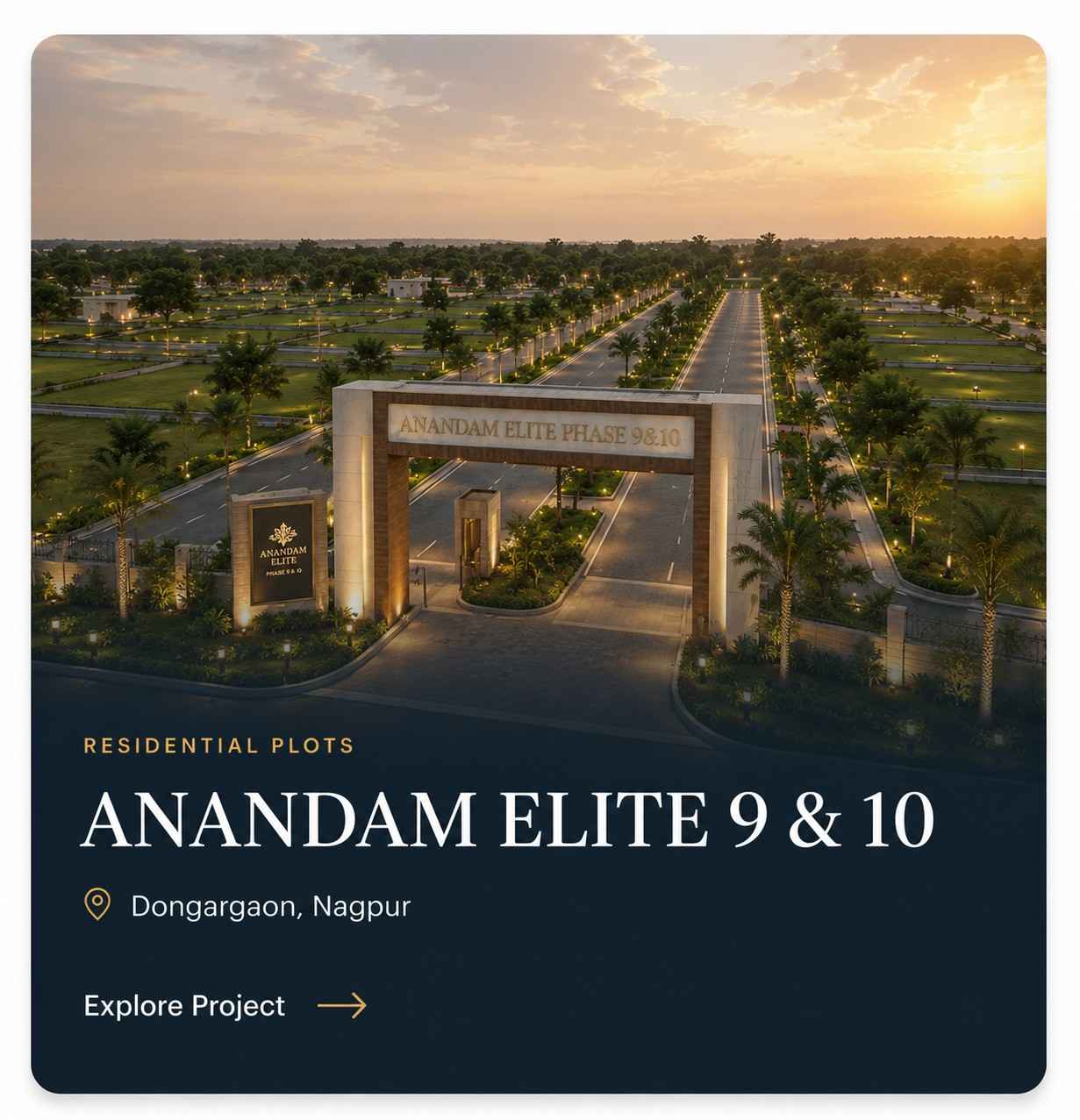
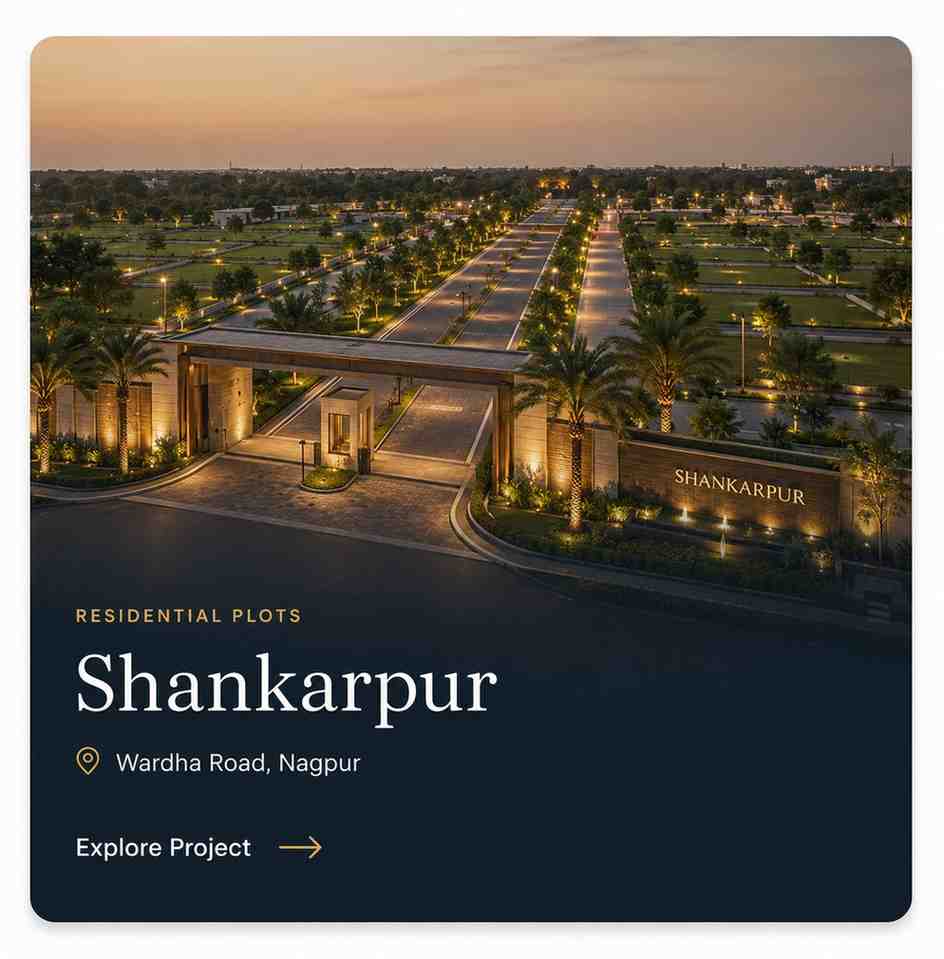
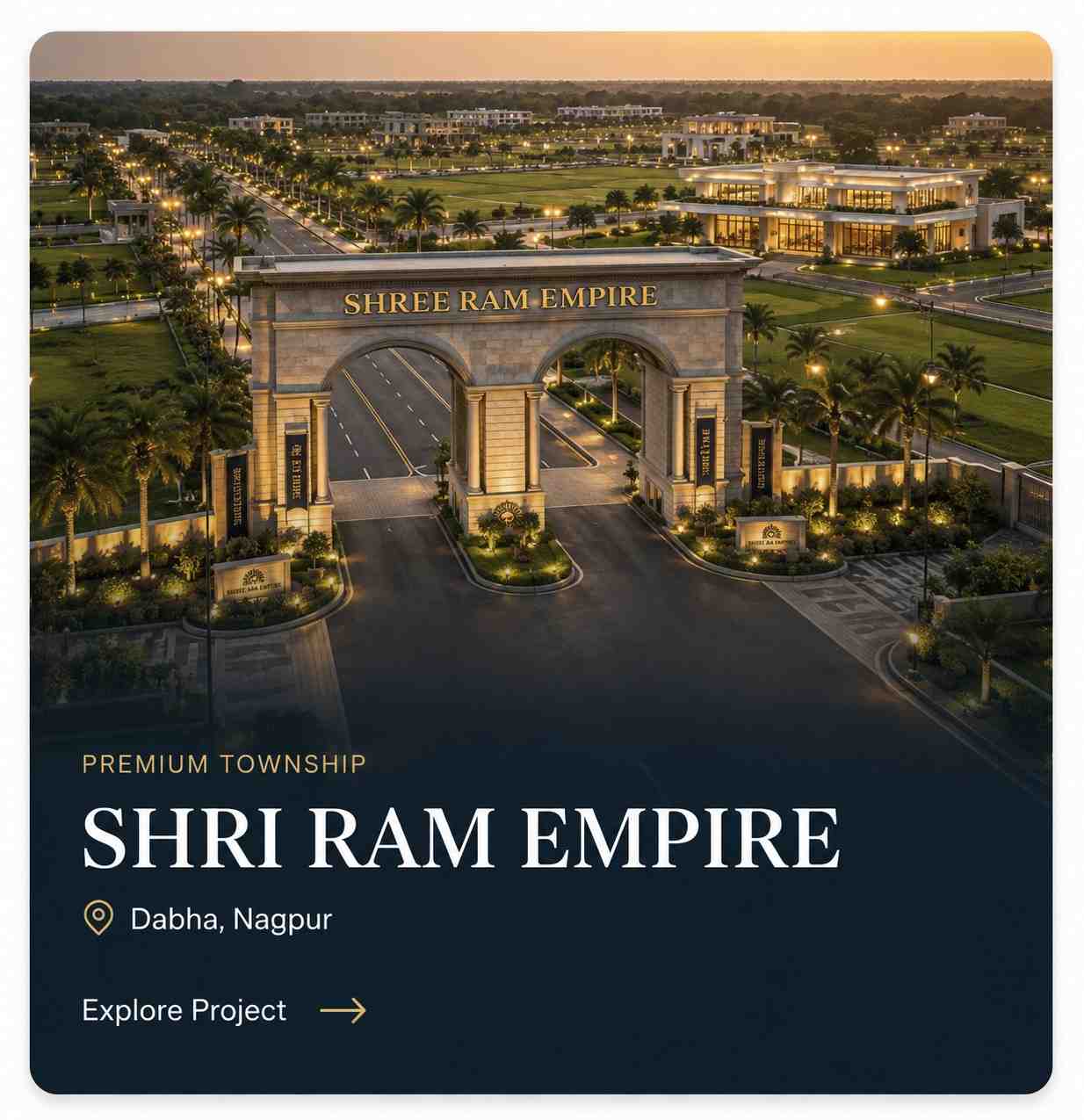
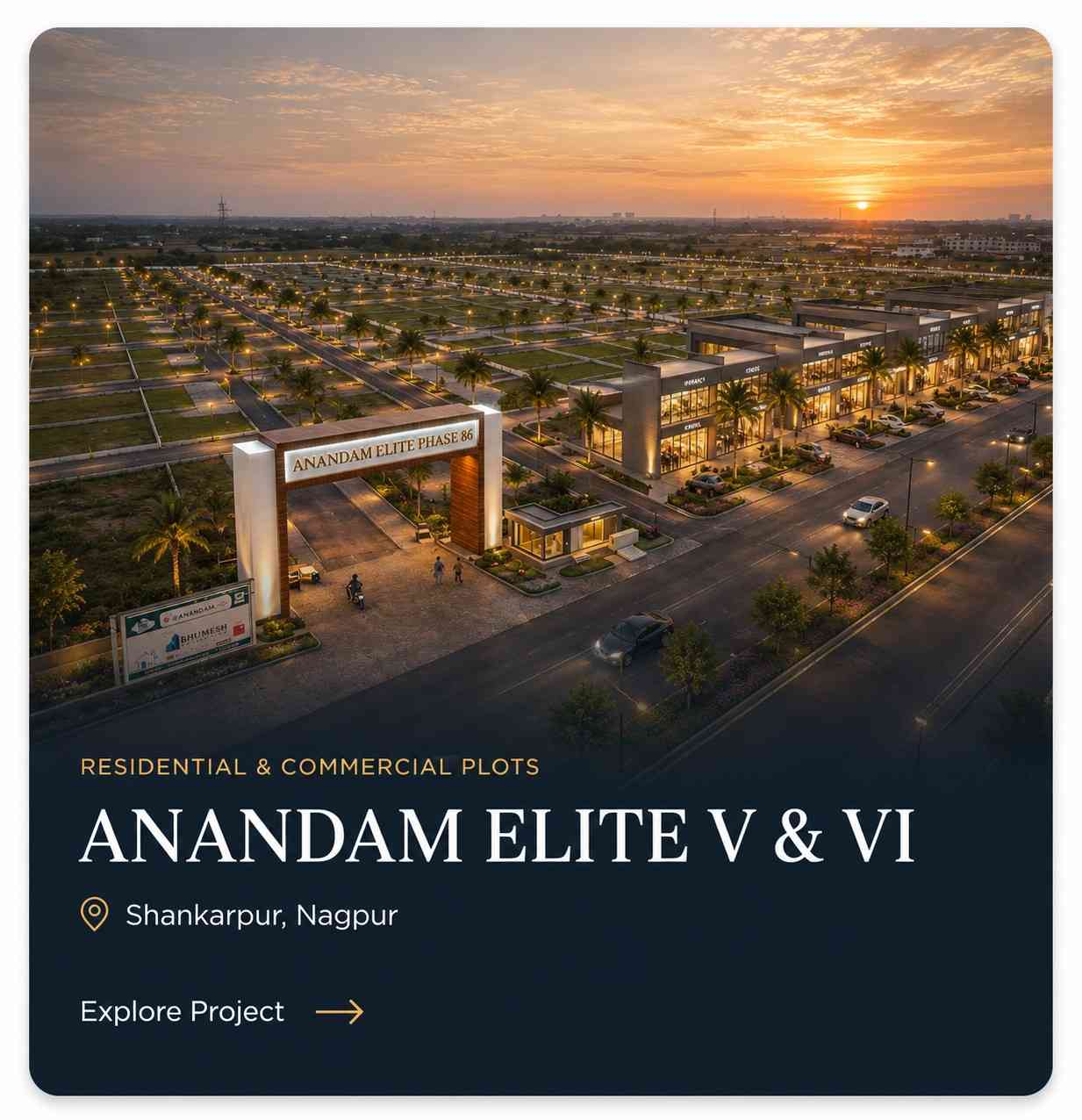
This is precisely the kind of due diligence Bhumesh Realtors applies across its residential and investment plot projects in locations like Wardha Road, Shankarpur, Dongargaon, Dabha, Pipla, Isasani, Gumgaon, and Waranga — every project is backed by RERA approval, NMRDA sanction, and transparent documentation, so buyers aren’t left guessing about legal standing after they’ve already paid.
If you’d like to see which approved layouts are currently available, you can browse Our Projects, check specifics under RERA Approved Projects and NMRDA Approved Layouts, or read more About Us and our track record since 2018.
Building Your Own Realistic Budget: A Simple Checklist
Before you finalise any plot in Nagpur, work through this checklist:
- Confirm the base price and exact saleable area in writing.
- Ask for the Ready Reckoner rate applicable to that specific locality.
- Get a written estimate of stamp duty and registration charges based on the higher of agreement value or Ready Reckoner rate.
- Confirm whether development charges are included or additional.
- Budget a fixed amount for legal verification and documentation.
- If financing, get loan pre-approval and ask about processing charges.
- Ask about society formation, maintenance, and utility connection charges.
- Verify RERA and NMRDA approval status of the layout directly, not just take a verbal assurance.
- Add a 10–15% buffer over the base price for the combined cost of everything above.
- Get every commitment in writing before paying your token amount.
If you’d like personalised help working through this checklist for a specific plot, Contact Us or ask about Home Loan Assistance — our team can walk you through an itemised cost estimate for any of our approved layouts.
Frequently Asked Questions
1. What is the real cost of buying a plot in Nagpur, beyond the base price?
The real cost typically runs 8–15% above the quoted base price once you include stamp duty, registration charges, legal verification, development charges, and smaller costs like documentation and utility connections. The exact percentage depends on the locality, whether the plot falls within municipal limits or an NMRDA peripheral zone, and whether development charges are already included in the quoted rate. Always ask for an itemised cost sheet rather than relying on the per-square-foot number alone, since that figure only reflects the land price and not the total legal and administrative cost of ownership.
2. How is stamp duty calculated on a plot purchase in Maharashtra?
Stamp duty is calculated on whichever is higher: your negotiated agreement value or the government’s Ready Reckoner rate for that locality. This means even if you negotiate a lower price with the seller, you may still pay stamp duty based on the higher Ready Reckoner value. Rates also vary depending on whether the plot falls within municipal corporation limits, which typically attract additional cess, or in a Gram Panchayat or NMRDA peripheral area, which often has a lower base rate. It’s best to confirm the applicable rate for your specific plot before finalising your budget.
3. What are the registration charges for a plot in Nagpur?
Registration charges in Maharashtra are generally calculated as 1% of the property’s market value or Ready Reckoner value, whichever is higher, with a cap of ₹30,000 for properties valued above ₹30 lakh. For plots valued at or below ₹30 lakh, the fee remains at 1% of the higher applicable value without the cap coming into play. This charge is separate from stamp duty and is paid to the Sub-Registrar’s office to formally record your ownership in government land records, which is essential for legal protection of your title.
4. What hidden charges should I watch out for while buying a plot?
Common hidden costs include boundary demarcation and fencing, NA (non-agricultural) conversion charges if not already completed, society or association formation fees, individual electricity and water connection charges, and brokerage if you’re working through an independent agent. None of these are inherently dishonest costs — they’re simply not always mentioned upfront unless you ask directly. The safest approach is to request a complete, itemised cost sheet from your developer before paying any token amount, so nothing surfaces unexpectedly at the registration stage.
5. Is it better to buy a RERA-approved plot instead of an unapproved one?
Yes, significantly so. A RERA-approved project means the developer has registered with the Real Estate Regulatory Authority and is legally accountable for disclosed timelines and project details. This reduces your legal risk considerably, since key due diligence around land title and project disclosures has already been scrutinised at the regulatory level. Unapproved layouts carry higher risk of loan rejection, resale complications, and in some cases disputes over land classification years down the line, making the small cost difference well worth it for long-term peace of mind.
6. What does NMRDA approval mean for plots around Nagpur?
NMRDA, or the Nagpur Metropolitan Region Development Authority, sanctions layouts in the peripheral growth zones around Nagpur city, including areas like Wardha Road, Shankarpur, Dongargaon, Dabha, and Pipla. An NMRDA-approved layout means the plotting pattern, internal road widths, and land-use classification have been officially reviewed and sanctioned, rather than being an informal subdivision. This matters directly for bank loan approval, since lenders are far more comfortable financing plots in sanctioned layouts, and it also protects your resale value down the line.
7. Can I get a bank loan to buy a plot in Nagpur, and what will it cost?
Yes, plot loans are available, and approved projects with RERA and NMRDA sanction typically see smoother loan processing since banks require confirmation of clear title and approved land-use status before sanctioning. Beyond the loan amount itself, expect to budget for a processing fee, usually a percentage of the loan, along with legal and technical valuation charges the bank conducts independently. With up to 90% financing assistance available on approved projects, it’s worth getting a preliminary loan estimate before finalising your plot so you know your total financing cost upfront.
8. How much should I budget over the plot price for total costs?
As a general planning guide, budgeting an additional 10–15% over the quoted base price is a reasonable starting point to cover stamp duty, registration, legal verification, development charges, and smaller administrative costs. This can vary depending on whether your plot falls within municipal limits or a peripheral NMRDA zone, and whether development charges are bundled into the base price or charged separately. Always confirm exact figures with your developer or documentation consultant rather than relying solely on a general percentage, since local variations matter.
9. What legal documents should I verify before buying a plot in Nagpur?
At minimum, verify the seller’s clear title, the 7/12 extract or property card, confirmation of NA (non-agricultural) conversion status if applicable, layout approval documents from NMRDA, and RERA registration details if the project falls under RERA’s purview. It’s also worth confirming there are no pending litigations or encumbrances on the land. Buying in an already RERA and NMRDA approved project significantly reduces the burden of this verification, since much of this due diligence has already been completed and sanctioned at the project level before individual plots are sold.
10. Are maintenance and utility charges included when I buy a plot?
Usually not. Maintenance charges for the upkeep of internal roads, common lighting, and landscaping are typically billed annually or monthly after possession, separate from your one-time purchase cost. Utility charges — individual electricity meter installation and water connection — are also generally paid by the buyer separately, either at the time of construction or shortly after registration. It’s worth asking your developer for expected maintenance rates and utility connection costs in advance so you can plan for these as part of your long-term ownership budget, not just your initial purchase.
Final Thoughts: Know the Full Number Before You Commit
The base price of a plot is only the starting point of your budget, not the finish line. Stamp duty, registration charges, legal verification, development charges, and a handful of smaller costs typically add 8–15% to whatever number you first hear during a site visit or brochure pitch.
The good news is that none of this is unpredictable once you know what to ask. Request an itemised cost sheet, confirm the Ready Reckoner rate for your locality, verify RERA and NMRDA approval status, and get your loan pre-approved before you pay your token amount. Do this, and there will be no last-minute surprises standing between you and a plot you can own with complete confidence.
If you’re evaluating a residential or investment plot around Wardha Road, Shankarpur, Dongargaon, Dabha, Pipla, Isasani, Gumgaon, or Waranga, the team at Bhumesh Realtors can walk you through a complete, itemised cost estimate for any approved project — so you know the real number before you commit. Contact Bhumesh Realtors today for a personal consultation and site visit.



Comments are closed