





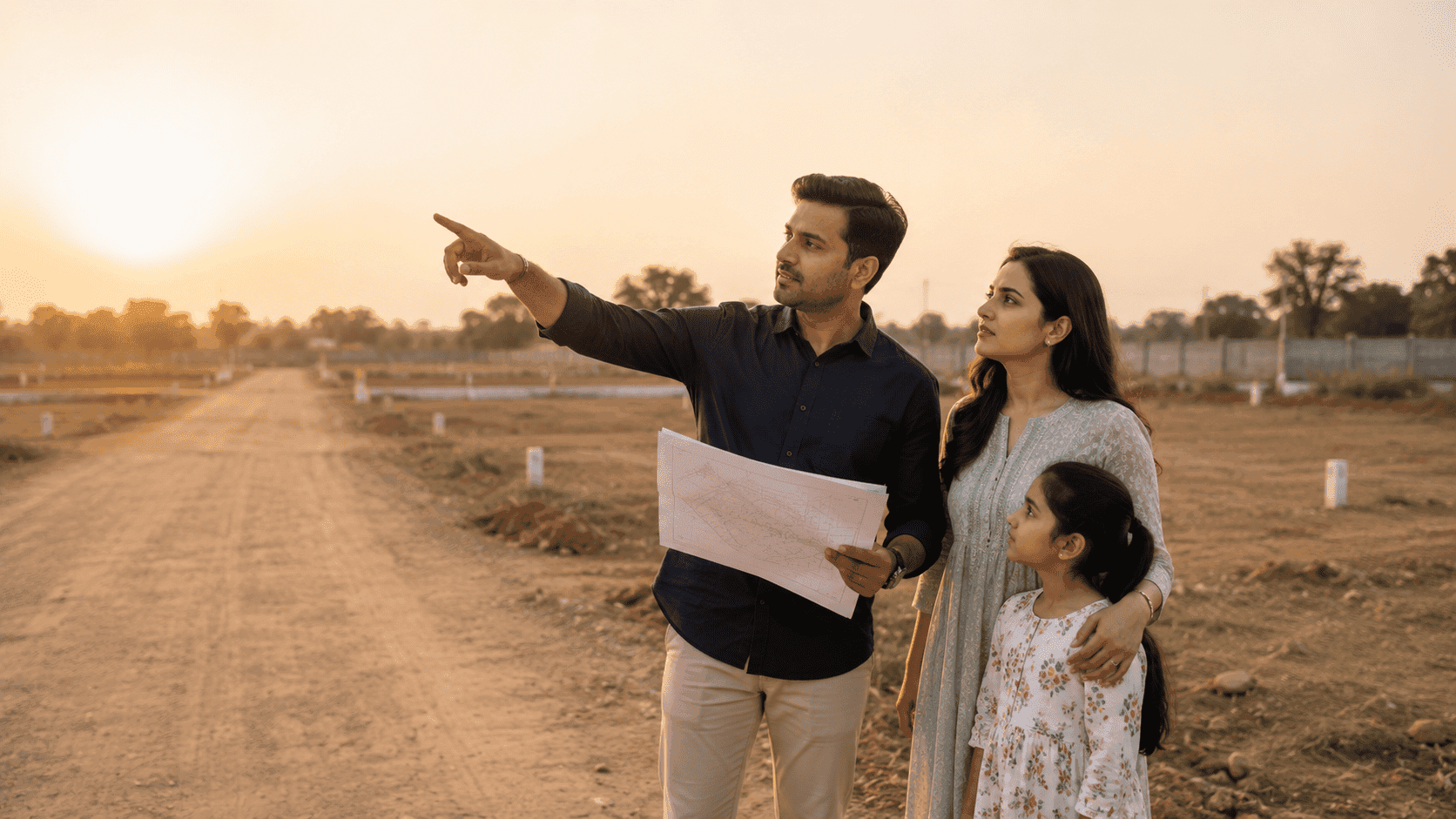
Buying a plot is one of the biggest financial decisions a family or investor will ever make. Yet, every year, thousands of buyers across India — including here in Nagpur — book plots based only on brochures, WhatsApp photos, or a smooth sales pitch over the phone. Weeks or months later, many of them discover that the “wide internal road” in the photo was actually a narrow kutcha track, or that the plot they liked is a few feet lower than the road and floods every monsoon.
This is not a rare story. It is one of the most common regrets in the plotting and residential land market, and almost all of it is avoidable. The single step that prevents most of these problems is also the one buyers skip most often: a proper, unhurried, in-person site visit.
A site visit is not a formality you complete after “finalising” a plot. It should be the deciding step — the moment where paper promises meet ground reality. In this guide, we’ll walk through exactly why a site visit matters, what to physically inspect, the questions you should ask before paying a single rupee, the red flags that should make you walk away, and a complete printable checklist you can carry with you on your next visit.
This guide is written for first-time buyers, families planning to build a home, working professionals investing for the future, and NRIs who may only get one or two chances to see a plot in person before deciding. Whether you’re evaluating plots near Wardha Road, Dongargaon, Dabha, Isasani, or anywhere else in Nagpur’s growing residential belt, the fundamentals of a good site visit remain the same.
Table of Contents
Why a Site Visit Matters
Photographs, drone shots, and brochure layouts are marketing tools. They are designed to show a project at its best angle, in good light, often before internal development work is fully complete. None of this is necessarily dishonest — but it is incomplete. A site visit fills in everything a photo cannot show you.
1. Photos and videos cannot show scale or distance. A plot that looks “close to the highway” in a marketing image may actually be a 15-minute drive away once you account for internal roads, turns, and traffic. Standing at the actual plot and looking around gives you a true sense of distance to the main road, the nearest market, and other landmarks.
2. Brochures cannot show ground level and drainage. Whether a plot sits above or below the road level has a direct impact on water accumulation during monsoons. This is one detail that is almost impossible to judge from a photograph but immediately obvious when you stand on the plot.
3. Listings cannot confirm what’s actually built. A brochure may show “planned amenities” — a garden, a clubhouse, internal roads — as computer-generated renders. A site visit tells you what already exists versus what is still promised for a future phase.
4. You cannot verify documents remotely. Layout approval boards, RERA registration numbers, and the developer’s signage are legally required to be displayed at the site in most approved projects. You can only verify these by being physically present.
5. Neighbourhood context only reveals itself in person. Noise levels, nearby industrial activity, upcoming construction, quality of neighbouring properties, and general upkeep of the area are things you sense immediately on a visit but rarely appear in marketing material.
6. A site visit protects your loan and resale value. Banks eventually send their own valuers to inspect a plot before sanctioning a loan. If there are access issues, boundary disputes, or missing approvals, your loan process can stall. Buyers who inspect early avoid this shock later.
In short: a brochure sells you a story. A site visit shows you the truth. Serious buyers always insist on the second one before signing anything.
What Buyers Should Inspect During a Site Visit
A good site visit is systematic, not casual. Walk the entire plot and its surroundings, not just the sales office. Here is what to check, point by point.
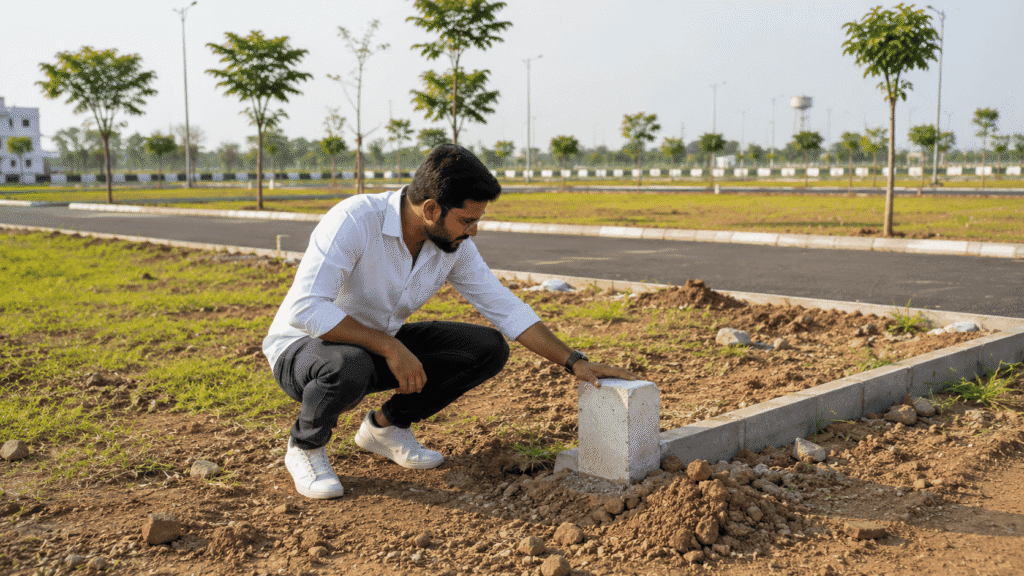
1. Plot Boundaries
Ask the site representative to physically show you the four corners of the plot, ideally marked with survey stones, iron rods, or painted markers. Compare this with the layout map. Vague or missing boundary markers are a serious concern.
2. Road Access
Confirm that the plot has direct, legal access from an approved road — not through someone else’s private land. Note whether the access road is part of the approved layout or an informal path.
3. Internal Road Quality
Check whether internal roads are already constructed (cement, tar, or gravel) or still just marked on paper. Ask about road width and whether it matches what was promised in the brochure.
4. Drainage
Look for visible drains or channels for rainwater. Ask how stormwater is directed away from the layout, especially if the area has flat or low-lying stretches.
5. Water Availability
Ask about the source of water supply — borewell, municipal connection, or tanker-based — and whether individual plots will have a connection point.
6. Electricity Infrastructure
Check whether electric poles, transformers, or underground cabling are already present, and whether individual plot connections are included or need separate application.
7. Street Lighting
Walk the layout in the evening if possible. Street lighting is a small detail that says a lot about how “livable” the layout already is versus how much is still on paper.
8. Nearby Development
Observe what’s actually being built around the plot — homes, shops, or vacant land. A layout surrounded by active construction usually signals genuine demand.
9. Public Transport
Check the nearest bus stop, auto-stand, or future metro connectivity, and how far it actually is on foot, not just “as the crow flies.”
10. Schools
Note the distance and travel time to reputed schools, since this matters both for your family’s daily routine and for the plot’s future resale appeal.
11. Hospitals
Confirm proximity to a functioning hospital or clinic — an essential consideration, especially for families with children or elderly members.
12. Commercial Areas
Look at how far the nearest grocery store, market, or commercial complex is. Early-stage layouts sometimes have very limited nearby commercial activity, which can change over a few years.
13. Green Spaces
Check whether the promised gardens, open spaces, or parks are already developed, marked out, or still just a shaded area on the layout plan.
14. Noise Levels
Stand quietly for a few minutes. Note traffic noise, nearby industrial sounds, or railway lines that may not be obvious from a short drive-through.
15. Mobile Network
Simply check your phone signal strength at the actual plot. Poor network coverage is easy to overlook and easy to test on the spot.
16. Internet Connectivity
Ask locally or check with your provider whether broadband or fibre connections are available or planned in the area — increasingly important for remote-working buyers.
17. Soil Condition
Look at the soil texture. Very soft, sandy, or waterlogged soil can affect construction cost and foundation planning later.
18. Flood Risk
Ask neighbours or long-time local residents (not just the sales team) whether the area has experienced flooding or waterlogging in past monsoons.
19. Plot Elevation
Compare the plot’s height relative to the main road and neighbouring plots. A plot noticeably lower than the road is at higher risk of water accumulation.
20. Legal Display Boards
Approved layouts are required to display information boards showing RERA registration, layout approval number, and developer details at the site. Confirm these are present and legible.
21. Layout Signage
Cross-check the signage and layout map displayed at the site against what you were shown in the brochure or on WhatsApp — they should match exactly.
22. Nearby Future Developments
Ask about planned roads, industrial zones, or infrastructure projects nearby. These can significantly affect both livability and future appreciation, positively or negatively.
Questions Every Buyer Should Ask During a Site Visit
Carry this list with you and don’t leave until you have clear, documented answers — not verbal reassurances.
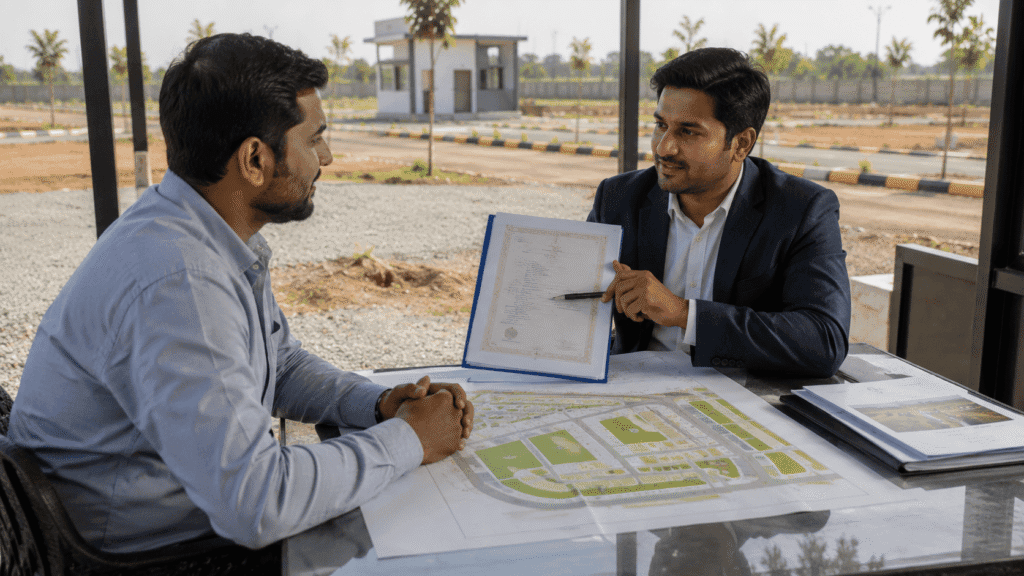
- Is this project RERA approved? Can I see the registration certificate and number?
- Is the layout approved by the relevant local planning authority (such as NMRDA)?
- Are the internal roads fully completed, or still under construction?
- Are electricity, water, and drainage connections already available at each plot, or planned for later?
- Is immediate possession available, or is there a waiting period?
- Are there any additional development charges beyond the quoted plot price?
- Which banks currently provide home or plot loans for this specific project?
- What legal documents will I receive at the time of registration?
- Has the project received all mandatory government approvals, and can copies be shared?
- What infrastructure — roads, transport, commercial development — is officially planned nearby?
- Is the title clear, and has a title search or legal opinion been conducted?
- What is the exact carpet/plot area versus the saleable area being quoted?
- Are there any pending litigations or disputes related to this land?
- What is the payment schedule, and are there penalties for delayed instalments?
- Who maintains the layout (roads, gardens, security) after possession, and is there a maintenance charge?
If a sales representative is unwilling to answer any of these clearly or asks you to “trust them” instead of showing documentation, treat that as a warning sign, not reassurance.
Common Red Flags Buyers Should Never Ignore
Some issues are minor and fixable. Others should make you pause the entire transaction. Watch for these:
- Undefined or unmarked boundaries — if nobody can show you exact corners on the ground, the risk of future disputes is high.
- No legal access road — a plot that can only be reached by crossing someone else’s private land is a serious long-term problem.
- Missing approvals — absence of RERA registration or layout approval documentation should never be dismissed as “paperwork in process.”
- Encroachments — any sign of unauthorised structures or fencing on or near the plot needs to be questioned directly.
- Waterlogging or standing water — even outside monsoon season, stains, moss, or drainage patterns can reveal chronic waterlogging.
- Poor or absent drainage — layouts without a visible drainage plan often develop problems within a few years.
- Illegal construction nearby — unauthorised buildings close to the layout can indicate weak local regulatory enforcement.
- Unclear ownership history — if the seller or developer cannot clearly explain the chain of ownership, insist on a legal opinion before proceeding.
- Verbal promises without documentation — “the road will be built soon” or “possession is guaranteed next month” mean nothing unless they are in writing.
- Hidden or undisclosed charges — development charges, society formation fees, or “additional” costs that appear only at the final stage.
- Unfinished core infrastructure — if roads, electricity, and drainage are all still “upcoming,” ask for a realistic, written completion timeline.
- General lack of development — a layout with no visible activity, months or years after launch, deserves extra scrutiny before you invest.
None of these automatically mean a project is fraudulent — many are simply at an early stage of development. But every one of them should be discussed openly, documented in writing, and factored into your decision and price negotiation.
Plot Site Visit Checklist (Printable)
Use this checklist during your visit. Tick each box only after physically verifying it, not based on what you were told.
A. Legal & Documentation
- RERA registration number verified and matches display board
- Layout approval (e.g., NMRDA/local authority) confirmed
- Title/ownership documents reviewed or legal opinion obtained
- No pending litigation or encumbrance on the property
- Layout signage matches brochure and sales documents
- Payment schedule and additional charges in writing
B. Physical Plot Verification
- Plot boundaries clearly marked and matched to layout map
- Plot elevation checked relative to road and neighbouring plots
- Soil condition observed
- No signs of encroachment on or around the plot
C. Infrastructure
- Internal roads completed or under active construction
- Drainage system visible and functional
- Water connection or source confirmed
- Electricity poles/connections present
- Street lighting installed
D. Neighbourhood & Connectivity
- Distance to main road/highway confirmed on-site
- Public transport access checked
- Nearby schools and hospitals identified
- Nearby commercial/market areas identified
- Noise levels assessed
- Mobile network signal tested
E. Amenities
- Promised green spaces/gardens exist or are clearly marked
- Security arrangements (gate, CCTV) confirmed if promised
- Community amenities match what’s advertised
F. Financial & Loan Readiness
- Bank loan eligibility for this specific project confirmed
- All costs (registration, stamp duty, development charges) itemised
- Possession timeline confirmed in writing
Site Visit Mistakes Buyers Commonly Make
Even motivated buyers often undermine their own site visit by making these mistakes:
Visiting only once, briefly. A 10-minute drive-by is not a site visit. Spend at least 45–60 minutes walking the plot and its surroundings.
Visiting only during the day, in good weather. Try to see the site in different conditions if possible, including after rainfall, to understand drainage and access realistically.
Relying only on the sales team’s narration. Sales representatives are helpful, but their job is to sell. Independently speak to neighbours, local shopkeepers, or residents nearby.
Not bringing a checklist. Without a structured list, it’s easy to get distracted by a nice garden model or sample layout office and forget to check the actual plot.
Skipping the “boring” checks. Drainage, soil, and elevation aren’t exciting, but they matter more long-term than a decorative entrance gate.
Not asking for documents on the spot. Many buyers assume they’ll “check the papers later.” Ask to see RERA and approval documents during the visit itself.
Making a booking decision under time pressure. Limited-period discounts or “only 2 plots left” pressure tactics are common. A good plot will still be a good plot next week after your due diligence is complete.
Not comparing multiple projects. Visiting only one project makes it hard to judge value. Compare at least two or three layouts in the same micro-market before deciding.
Expert Tips for a More Effective Site Visit
- Go prepared, not just curious. Carry the layout map, your checklist, a measuring tape if possible, and a fully charged phone for photos and location tagging.
- Visit at different times of day. Morning and evening visits reveal different things — traffic patterns, lighting, and noise levels vary significantly.
- Talk to existing plot owners, if any. Nobody gives a more honest picture of a layout than someone who already owns a plot there.
- Verify claims independently. Cross-check distance claims (to airport, highway, metro) using a map application rather than relying on the brochure figure alone.
- Take your own photos and notes. Don’t rely purely on memory or the developer’s marketing photos when comparing projects later.
- Involve a professional if you’re unsure. A second, experienced opinion — especially on documentation and approvals — is inexpensive compared to the cost of a mistake.
- Don’t skip the legal review just because the location feels right. A great location with unclear title is still a risky purchase.
Why Professional Guidance Makes Site Visits More Effective
Even the most careful buyer can miss details that an experienced professional would immediately notice — how to read a layout approval document, what a genuine RERA number should look like, or how to judge whether internal infrastructure timelines are realistic.
This is where an established, locally experienced real estate consultancy adds real value — not by replacing your own inspection, but by making it sharper and more informed. A knowledgeable local team can help you understand layout plans, cross-check approval documents, explain infrastructure timelines honestly, and flag details you might otherwise overlook.
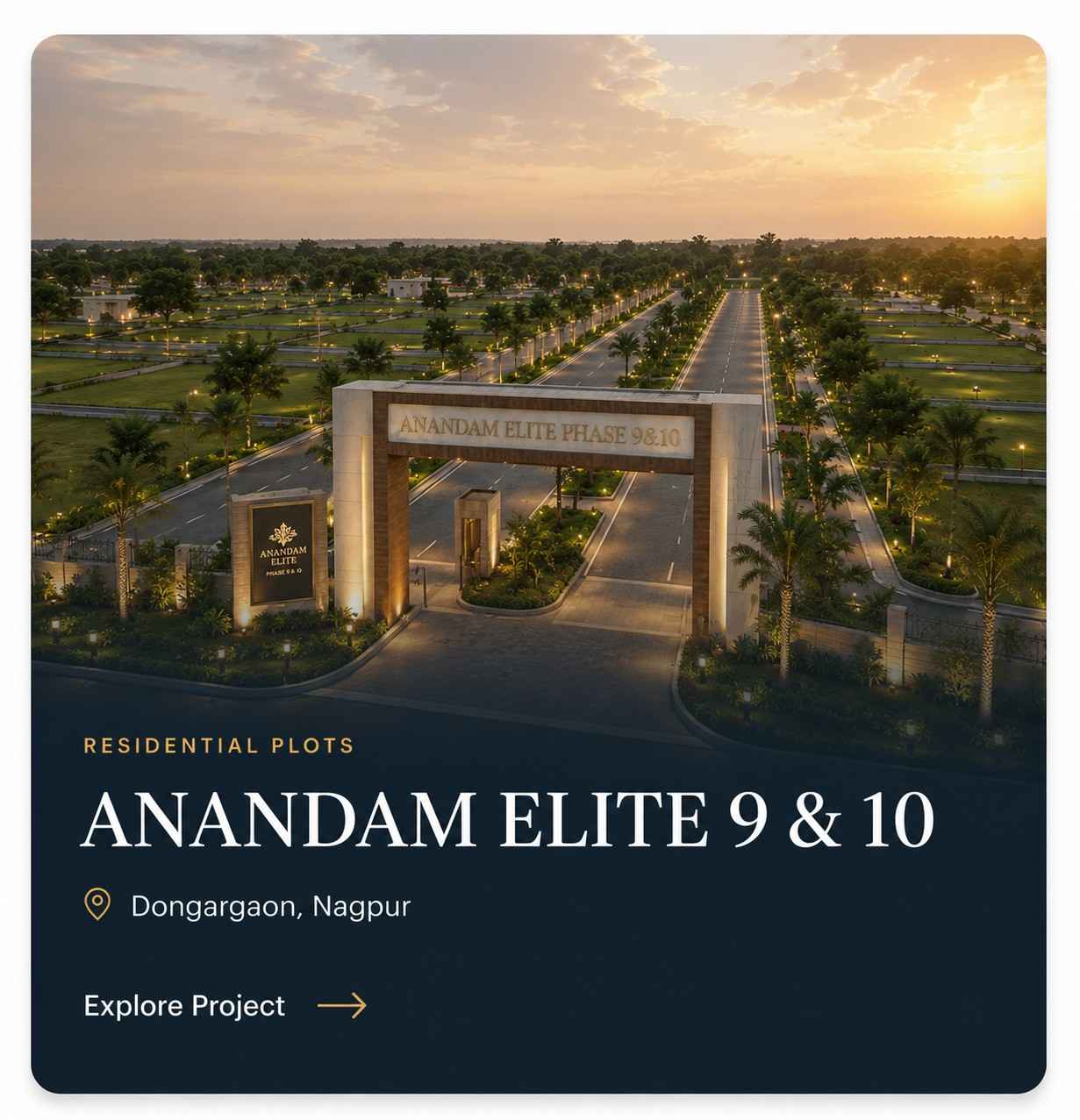
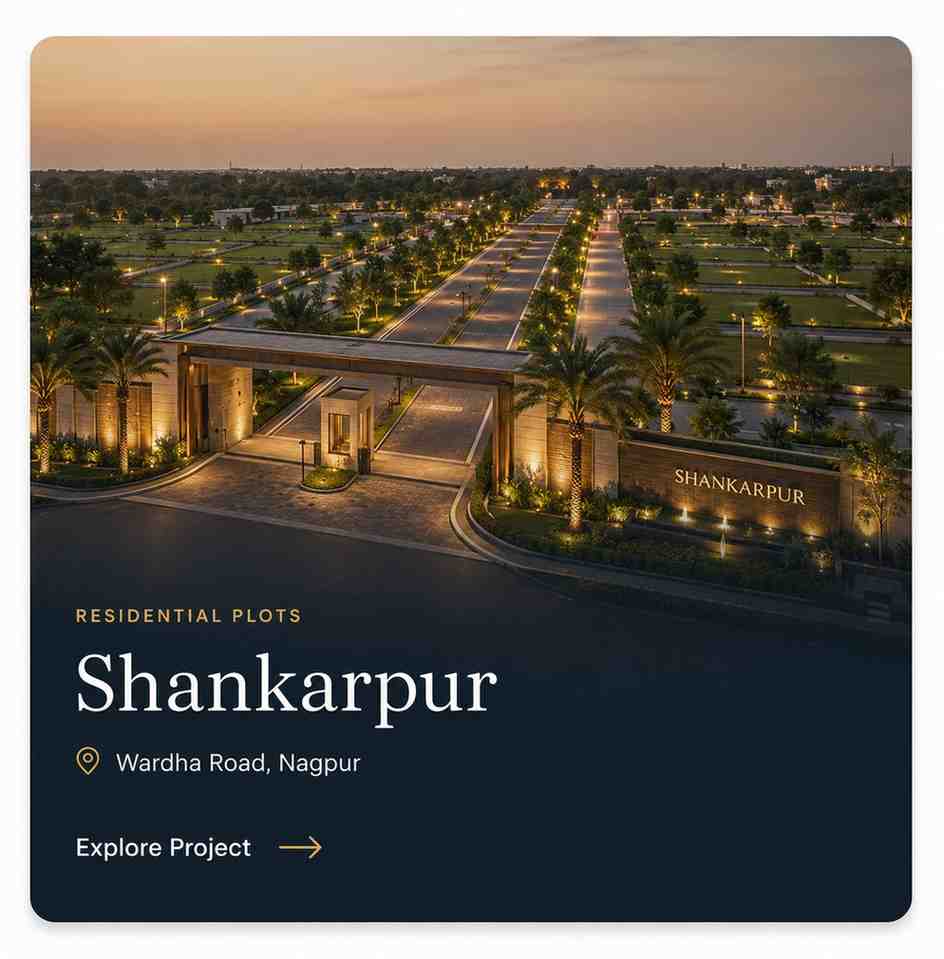
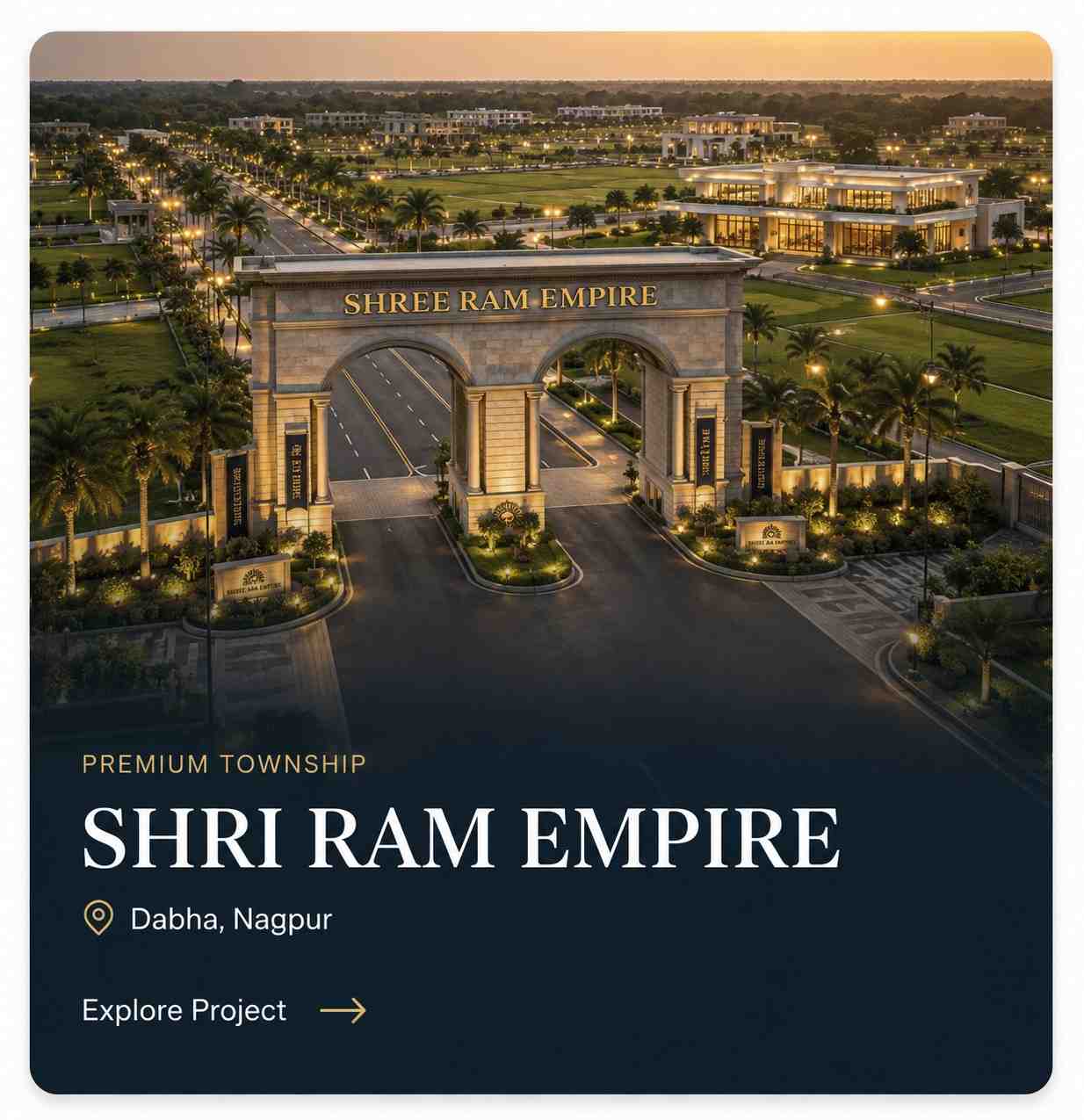
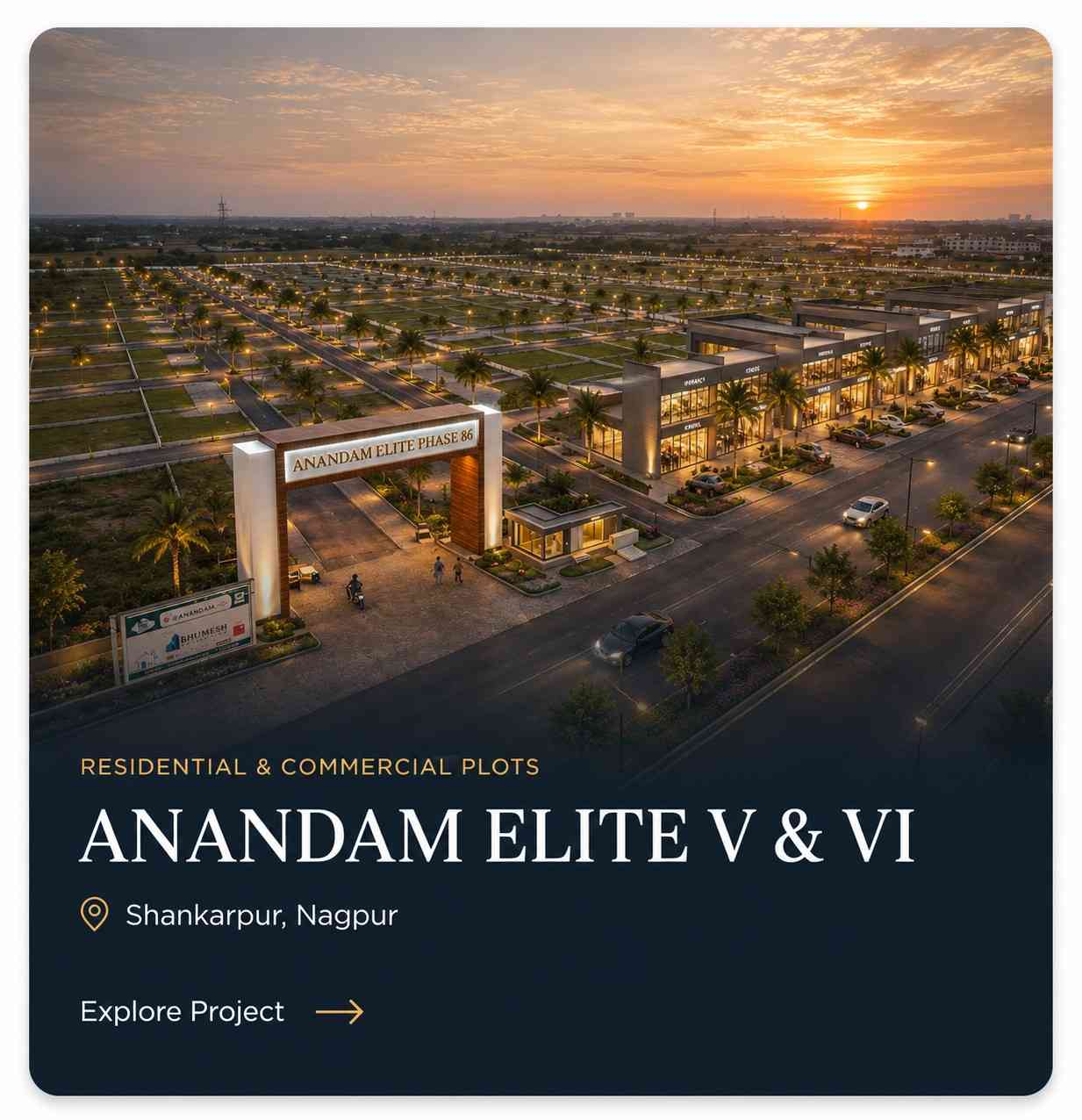
Bhumesh Realtors, a Nagpur-based real estate company operating since 2018, has guided buyers through this process across multiple project sites in the city’s growing residential belt, including areas such as Wardha Road, Dongargaon, Dabha, and Isasani. Their role during a site visit is straightforward: help buyers see the ground reality clearly, understand documentation, and make an informed decision at their own pace — never a rushed one.
Whatever consultancy or developer you choose to work with, insist on the same standard: full transparency, complete documentation, and an unhurried site visit before you commit.
Comparison Tables
Online Listing vs Physical Site Visit
| Aspect | Online Listing | Physical Site Visit |
|---|---|---|
| Plot boundaries | Shown on a map graphic | Physically verified with markers |
| Road access | Described in text | Walked and confirmed in person |
| Drainage & elevation | Rarely mentioned | Directly observable |
| Legal approvals | Claimed in brochure | Verified via displayed certificates |
| Neighbourhood feel | Not conveyed | Directly experienced |
| Infrastructure status | “Planned” vs “built” unclear | Clearly distinguishable on-site |
| Price transparency | Headline price only | Full cost breakdown discussed |
| Decision confidence | Low to moderate | High |
Checklist Category, What to Verify, Why It Matters
| Category | What to Verify | Why It Matters |
|---|---|---|
| Legal | RERA & layout approval | Protects ownership rights |
| Physical | Boundaries & elevation | Prevents disputes and water issues |
| Infrastructure | Roads, water, electricity, drainage | Determines livability and cost of development |
| Connectivity | Distance to road, transport, schools | Affects daily convenience and resale value |
| Financial | Bank loan eligibility, hidden charges | Impacts affordability and financing timeline |
Good Plot vs Risky Plot
| Feature | Good Plot | Risky Plot |
|---|---|---|
| Boundaries | Clearly marked, matches map | Vague or disputed |
| Access | Direct legal road access | Access through private/unclear land |
| Approvals | RERA + layout approval visible | Missing or “in process” indefinitely |
| Elevation | At or above road level | Noticeably lower, prone to flooding |
| Infrastructure | Roads, drainage, electricity present | Mostly on paper, unclear timeline |
| Documentation | Freely shared on request | Delayed, incomplete, or evasive |
Visible Features vs Hidden Risks
| Visible Feature | Possible Hidden Risk |
|---|---|
| Attractive entrance gate | Internal roads still incomplete |
| Green landscaped model area | Actual plots far from developed zone |
| Active sales office | Limited real construction activity nearby |
| Nearby upcoming project signage | No confirmed infrastructure timeline |
| Low starting price | Additional development/registration charges |
Infrastructure Checklist
| Infrastructure | Status to Confirm |
|---|---|
| Internal roads | Completed / under construction / planned |
| Drainage system | Present and functional |
| Water supply | Source and connection confirmed |
| Electricity | Poles/transformer/connection present |
| Street lighting | Installed and functional |
Legal Checklist
| Document/Approval | Confirm On-Site |
|---|---|
| RERA registration | Number matches display board |
| Layout approval | Issued by relevant local authority |
| Title documents | Clear chain of ownership |
| Encumbrance status | No pending disputes or dues |
| Sale agreement | All verbal promises included in writing |
Buyer Observation Sheet
| Observation Point | Your Notes |
|---|---|
| Time and date of visit | |
| Weather conditions | |
| Distance from main road (measured) | |
| People/families seen in the area | |
| Condition of internal roads | |
| Any visible waterlogging | |
| Mobile signal strength | |
| Overall impression |
Infographics (Text Flow Diagrams)
BUYER SITE VISIT PROCESS
Research
   ↓
Schedule Site Visit
   ↓
Inspect Plot
   ↓
Verify Documents
   ↓
Evaluate Infrastructure
   ↓
Compare Projects
   ↓
Take Expert Advice
   ↓
Purchase Decision
ON-SITE INSPECTION FLOW
Arrive at Site
   ↓
Walk Full Plot Boundary
   ↓
Check Elevation & Drainage
   ↓
Inspect Roads & Utilities
   ↓
Review Layout Signage & Approvals
   ↓
Talk to Neighbours/Existing Owners
   ↓
Ask Questions & Note Answers in Writing
   ↓
Compare Findings Against Checklist
RED FLAG DECISION FLOW
Red Flag Observed
   ↓
Is it Documented in Writing?
   ↓
No → Request Written Clarification
   ↓
Still Unclear → Consult Legal/Professional Advisor
   ↓
Unresolved → Reconsider or Walk Away
Charts (Markdown Tables)
Importance of Site Inspection Factors (Illustrative Buyer Priority Scale, 1–10)
| Factor | Typical Buyer Priority |
|---|---|
| Legal approvals (RERA/layout) | 10 |
| Boundary verification | 9 |
| Road access | 9 |
| Drainage & elevation | 8 |
| Water & electricity | 8 |
| Neighbourhood development | 7 |
| Connectivity to schools/hospitals | 7 |
| Amenities | 6 |
| Aesthetics of entrance/signage | 4 |
Risk Assessment Matrix
| Risk Area | Low Risk Indicator | High Risk Indicator |
|---|---|---|
| Legal | Approvals verified | Approvals “pending” long-term |
| Physical | Clear boundaries, good elevation | Disputed boundaries, low-lying land |
| Infrastructure | Roads/utilities complete | Mostly unbuilt, no timeline |
| Financial | Transparent costs | Hidden/undisclosed charges |
Infrastructure Evaluation Scorecard
| Infrastructure Element | Present | Partially Present | Not Present |
|---|---|---|---|
| Internal Roads | |||
| Drainage | |||
| Water Supply | |||
| Electricity | |||
| Street Lighting |
Buyer Decision Matrix
| Criteria | Project A | Project B | Project C |
|---|---|---|---|
| Legal approval status | |||
| Infrastructure readiness | |||
| Connectivity | |||
| Price per sq. ft. | |||
| Overall confidence (1–10) |
Investment Confidence Score
| Component | Weight | Your Assessment |
|---|---|---|
| Legal clarity | High | |
| Infrastructure status | High | |
| Location growth potential | Medium | |
| Amenities | Medium | |
| Price competitiveness | Medium |
Frequently Asked Questions
1. Why is a site visit necessary if the developer provides a detailed brochure? Brochures are marketing tools designed to present a project attractively, and they are often prepared before development work is fully complete. A site visit lets you verify what actually exists today — boundaries, roads, drainage, and utilities — instead of relying on renders or future promises. It also lets you sense the neighbourhood, noise levels, and general upkeep, none of which come across accurately in printed or digital material. For a purchase as significant as land, this direct verification step should never be skipped, regardless of how detailed the brochure appears.
2. How long should a proper site visit take? A thorough site visit typically takes 45 minutes to a couple of hours, depending on the size of the layout. This includes walking the plot boundaries, checking internal roads and drainage, reviewing displayed approval documents, and speaking with the site team or any existing residents. Rushing through a visit in 10–15 minutes usually means missing important details like elevation, soil condition, or subtle drainage issues that only become obvious with careful observation.
3. What documents should be available for viewing during a site visit? At a minimum, ask to see the RERA registration certificate, the layout approval from the relevant planning authority, and the project’s information display board, which is legally required to show key project details. You should also request title documents or a summary of the ownership chain. If any of these are unavailable or the team is reluctant to share them, treat it as a signal to slow down and seek independent legal advice before proceeding further.
4. How can I check if a plot has proper legal approvals? Ask directly for the RERA registration number and cross-check it on the official Maharashtra RERA website (maharera.maharashtra.gov.in), along with the layout approval from the applicable local planning authority. Compare these details against what’s displayed on the project’s signage board at the site. If you’re unsure how to interpret any document, it’s worth having a property lawyer or experienced consultant review it before you commit any payment.
5. What is the difference between RERA approval and layout approval? RERA (Real Estate Regulatory Authority) approval relates to registering the project under real estate regulation law, primarily to protect buyer interests through disclosure and accountability. Layout approval, on the other hand, is granted by the local planning or development authority and confirms that the land subdivision itself — plot sizes, roads, and reserved spaces — meets planning norms. A project ideally should have both, and buyers should verify each separately rather than assuming one implies the other.
6. What should I do if internal roads or utilities are not yet complete? It’s common for larger layouts to be developed in phases, so incomplete infrastructure isn’t automatically a dealbreaker. However, ask for a written, realistic timeline for completion, and where possible, get this included in your sale agreement. Comparing the developer’s current progress against their original timeline (if the project has been running for a while) also gives you a sense of whether commitments are generally honoured.
7. How do I check if a plot is prone to flooding or waterlogging? Visually compare the plot’s elevation to the main road and surrounding plots — land noticeably lower than its surroundings is at higher risk. It also helps to visit during or shortly after the monsoon season if possible, and to talk to long-term local residents who have seen how the area behaves in heavy rain. Signs like water stains, moss growth, or unusually soft ground can indicate chronic waterlogging even outside the rainy season.
8. Is it necessary to hire a lawyer before finalising a plot purchase? While not legally mandatory, having a property lawyer review the title documents, encumbrance status, and sale agreement is strongly recommended, especially for first-time buyers or high-value investments. A lawyer can identify issues in ownership history or documentation that may not be obvious to a buyer without a legal background. This small upfront cost is minor compared to the potential cost of resolving a legal dispute later.
9. Can I get a home loan for a plot purchase, and does the bank also inspect the site? Many banks and housing finance companies offer plot loans, particularly for RERA-approved and clearly titled projects, though loan terms and eligible projects vary by lender. Banks typically conduct their own technical and legal verification, including a site inspection by their valuer, before sanctioning a loan. If your own site visit reveals access issues, unclear boundaries, or missing approvals, these same issues are likely to surface during the bank’s evaluation and could delay or block your loan.
10. What’s the difference between visiting during the day versus in the evening? Daytime visits are better for assessing physical details — boundaries, soil, elevation, and construction progress. Evening visits reveal different information: whether street lighting works, how noisy the area gets during peak traffic hours, and how safe the surroundings feel after dark. If you can manage both, you’ll get a much more complete picture of what daily life at that location would actually be like.
11. What should I do if the sales team pressures me to book immediately during the visit? Take a step back. Genuine, well-documented projects with real demand rarely require high-pressure tactics to sell. It’s reasonable to ask for time to review documents, compare with other projects, or consult a professional before making a decision. A short delay of a few days rarely affects genuine availability, and any developer discouraging that due diligence deserves closer scrutiny.
12. Should I still do a site visit if I’m buying purely as a long-term investment and don’t plan to build immediately? Yes — arguably even more so. As an investor, your returns depend heavily on the project actually being developed as promised, with proper legal standing and improving infrastructure over time. A site visit lets you assess real progress, judge whether the location’s growth story matches the sales narrative, and confirm that your investment is legally sound, regardless of whether you plan to build on the plot soon or hold it for appreciation.
Bhumesh Realtors
Trusted real estate company in Nagpur since 2018, offering NMRDA & RERA approved plots with up to 90% bank loan assistance. Over 3,000+ plots sold across prime Wardha Road locations.
Address: 4 th Floor, Lusin Tower, Wardha Road Nagpur, 440015
Phone: +0712 2222712 +919370159082
Website: https://bhumeshrealtors.com/
Email: digital.bhumesh@gmail.com contact@bhumeshrealtors.com
You tube link: https://www.youtube.com/@bhumeshrealtors5206
Instagram : https://www.instagram.com/bhumesh_realtors/
Twitter : https://x.com/BhumeshRealtors
Facebook : https://www.facebook.com/bhumeshrealtors/
Linked in : https://www.linkedin.com/company/bhumesh-realtors/



Comments are closed