











Buying a residential plot is one of the biggest financial decisions a family or investor makes. Most buyers focus on price, location, and paperwork — and rightly so. But one question often gets overlooked until much later: will this plot be easy to resell, and will it hold or grow its value over time?
Plot Resale value doesn’t just matter to investors who plan to sell in five or ten years. It matters just as much to families who intend to build a home someday, because life circumstances change — a job relocation, a change in family size, or a new opportunity can turn a “forever plot” into a “sell it now” plot. When that day comes, the plot’s location, legal status, and physical characteristics will decide how quickly it sells and at what price.
This guide walks you through a practical, non-speculative framework for evaluating a plot’s long-term resale potential. It does not promise appreciation percentages or predict future prices — no one can honestly do that. Instead, it explains the real factors that experienced buyers, planners, and local real estate professionals look at before making a decision. Whether you are a first-time buyer, an NRI investing from abroad, or a professional planning a future home in Nagpur, this framework will help you ask the right questions before you sign anything.
Table of Contents
What Is Plot Resale Value?
Plot Resale value simply means the price a plot is likely to fetch when the current owner decides to sell it in the future. It is different from the purchase price and different from a “market rate” quoted casually by brokers. Resale value depends on how the plot, its neighborhood, and the surrounding infrastructure evolve over time — not just how they look today.
For a homebuyer, resale value matters because plans change. A family might buy a plot intending to build a house in ten years, but a job transfer, a change in city, or a shift in family needs could mean selling it earlier. A plot that is easy to resell gives that family flexibility without financial loss.
For an investor, resale value is the entire point of the purchase. The plot is bought specifically with the expectation that its worth will grow because of location development, infrastructure growth, or rising demand in that micro-market.
It’s important to understand that resale value is not guaranteed by any single factor. It is the outcome of many factors working together — location, legal clarity, infrastructure, plot characteristics, and market demand. A plot can look promising today and underperform if even one of these elements works against it, such as a delayed approval or stalled infrastructure project nearby.
Factors That Influence Future Plot Resale Value
No single factor determines whether a plot will resell well. Instead, resale potential is the sum of many overlapping influences. Below is a detailed look at each one.
Location
Location remains the single most talked-about factor in real estate, and for good reason. A plot’s location determines who wants to live there, how far it is from daily necessities, and how quickly the surrounding area is likely to develop. Locations near expanding city limits, employment corridors, or established residential pockets tend to attract more consistent buyer interest over time compared to isolated or remote plots with no nearby development activity.
Road Connectivity
A plot’s connection to major roads directly affects both livability and resale. Plots located along or near well-maintained arterial roads — such as those connecting to highways or ring roads — are generally easier to reach, which makes them more attractive to future buyers, contractors, and service providers alike.
Infrastructure Development
Ongoing or planned infrastructure — internal roads, drainage systems, streetlights, and boundary walls in gated layouts — signals that a project is being developed with long-term habitability in mind. Buyers reselling a plot in a layout with completed infrastructure typically face fewer objections during price negotiations than those in layouts where development is incomplete or stalled.
Employment Hubs
Proximity to employment centers — IT parks, industrial zones, business districts, or educational institutions that employ large numbers of people — tends to create steady housing demand nearby. When people work close to an area, they often prefer to live within a reasonable commuting distance, which supports long-term demand for residential plots in that zone.
Schools and Hospitals
Families evaluating a future home site place significant weight on nearby schools and healthcare facilities. A plot within reasonable distance of reputed schools and hospitals is generally viewed as more livable, which in turn supports resale demand among family buyers specifically.
Public Transport
Access to public transport — city buses, upcoming metro corridors, or well-connected auto and taxi routes — reduces daily commuting friction for future residents. Plots near current or planned transport nodes tend to remain attractive even as fuel costs and traffic congestion increase over time.
Metro and Highway Projects
Government-announced metro extensions, ring roads, or highway widening projects can meaningfully change the profile of an area over several years. However, buyers should treat these as long-term possibilities rather than guaranteed value boosters, since project timelines are frequently delayed and not all announced projects are completed as planned.
Plot Size
Plot size affects both affordability and future flexibility. Larger plots offer more construction options and may attract buyers looking to build bigger homes, while smaller plots are often more affordable and can see faster turnover among first-time buyers and small families.
Plot Dimensions
The shape and proportion of a plot — for example, a well-proportioned rectangular plot versus a narrow, elongated one — affects how efficiently it can be used for construction. Buyers and architects generally prefer plots with practical dimensions, which makes such plots easier to resell compared to irregularly shaped ones.
Corner vs Regular Plots
Corner plots typically offer additional frontage, better ventilation, and more flexibility in house design, which is why they often command a premium over regular mid-row plots in the same layout. This preference tends to hold up at resale time as well, though the exact premium depends on the specific layout and buyer preferences at that time.
Internal Road Width
Wider internal roads within a layout make it easier for vehicles, emergency services, and construction equipment to access individual plots. Layouts with generous internal road widths are generally perceived as better planned, which can positively influence how future buyers view the entire project.
Gated Township Amenities
Layouts offering amenities such as boundary walls, entrance gates, landscaped common areas, and dedicated parks tend to appeal to buyers seeking a managed, secure living environment. These features can differentiate a project from unplanned or ungated developments nearby, supporting steadier resale interest.
Legal Approvals (RERA, NMRDA, Layout Approval)
Legal approvals are foundational to resale value, not just a formality. A plot that is RERA registered and approved by the relevant development authority (such as NMRDA in the Nagpur region) gives future buyers, banks, and legal advisors confidence in its status. Plots lacking clear approvals often face difficulty securing home loans for the next buyer, which directly restricts the pool of interested purchasers.
Water and Electricity Availability
Practical utility access — a reliable water source and electricity connection — is often the deciding factor for buyers ready to build immediately. Plots without these basic utilities in place may see slower resale interest, particularly from buyers planning near-term construction.
Neighborhood Development
The pace at which surrounding plots are being built upon and occupied is a strong practical indicator of an area’s momentum. A neighborhood with visible construction activity and new residents moving in generally signals healthier long-term demand than one where plots remain vacant for years.
Commercial Growth Nearby
The arrival of shops, markets, restaurants, and small commercial establishments near a residential layout usually follows residential growth and then reinforces it further, since day-to-day conveniences make an area more livable. This cycle can support steady resale interest as the area matures.
Demand and Supply
Like any asset, plot values respond to the basic balance of buyers and available inventory. An area with limited plot supply and consistent buyer interest tends to hold value better than one with an oversupply of similar plots and few active buyers.
Future Government Infrastructure
Government master plans, proposed road widenings, and zoning changes can shape an area’s trajectory over many years. Buyers should research these plans through official sources but should treat them as one input among many rather than a guarantee of future value.
How Buyers Can Estimate Resale Potential
There is no formula that produces a precise future price, and any source claiming otherwise should be treated with caution. What buyers can do is follow a structured evaluation process that reduces guesswork and highlights genuine red flags before they commit.
Step 1: Study the location on multiple visits, not just one. Visit the plot at different times of day and, if possible, in different seasons. A location can look very different during monsoon (checking for waterlogging) versus a dry summer afternoon.
Step 2: Verify all legal documents independently. Don’t rely solely on the seller’s or broker’s word. Check RERA registration status, layout approval from the relevant authority (such as NMRDA for Nagpur-region layouts), and the 7/12 extract or equivalent land record.
Step 3: Assess current and planned infrastructure. Walk the internal roads, check drainage, and ask about the timeline for boundary walls, streetlights, and common area development if the project is still under construction.
Step 4: Research nearby employment and institutional growth. Look for any operating or announced employment hubs, educational institutions, or healthcare facilities within a reasonable radius.
Step 5: Compare similar plots in the same micro-market. Speak with multiple sellers or agents in the same layout or neighboring layouts to understand the range of asking prices, rather than anchoring to a single quote.
Step 6: Evaluate plot-specific features. Consider the dimensions, whether it’s a corner or regular plot, road-facing width, and overall usability for construction.
Step 7: Check for pending disputes or encumbrances. Request an Encumbrance Certificate and confirm there are no ongoing litigations, unclear inheritance issues, or boundary disputes tied to the land.
Step 8: Consult a professional for a second opinion. An experienced local consultant who regularly works in that specific micro-market can often flag issues or opportunities that aren’t obvious to an outside buyer.
Following this framework won’t guarantee a specific return, but it substantially reduces the chance of buying into a plot with hidden legal, physical, or locational weaknesses that would otherwise surface only at resale time.
Mistakes That Reduce Resale Value
Certain avoidable mistakes consistently show up in plots that struggle to resell. Being aware of them in advance can save buyers significant stress and money later.
Poor location selection. Choosing a plot purely because it’s cheap, without evaluating its distance from essential infrastructure and growth corridors, often leads to disappointment when it’s time to sell.
Buying disputed land. Skipping title verification to save time or money is one of the costliest mistakes a buyer can make. Disputed land can become nearly impossible to resell until the dispute is legally resolved, which can take years.
Ignoring approvals. Plots without RERA or NMRDA approval may seem cheaper upfront, but banks are often reluctant to finance them, which shrinks the pool of future buyers who can arrange a home loan.
Choosing irregular plot shapes. Oddly shaped plots — very narrow, triangular, or with an awkward frontage — are harder to design a home on and typically attract lower buyer interest compared to regular, well-proportioned plots.
Poor road access. A plot that requires navigating through narrow lanes or unpaved stretches to reach is inherently less convenient, and this inconvenience doesn’t disappear — it gets passed on to the next buyer.
Lack of infrastructure. Layouts where roads, drainage, and utilities remain incomplete for years tend to see slower appreciation and can even see values stagnate if development stalls entirely.
Waterlogging. A plot that floods or retains standing water during monsoon is a serious red flag. This issue is often invisible during a dry-season site visit, which is why multiple visits matter.
Overpaying without market comparison. Buying at a price significantly above what comparable plots in the same layout or nearby layouts are selling for makes it harder to see meaningful appreciation, since the buyer starts from an inflated base.
Signs That a Plot Has Strong Long-Term Potential
Rather than predicting prices, buyers can look for practical, observable signs that suggest healthy long-term demand.
- Visible construction activity on neighboring plots, indicating that people are actively choosing to build and live in the area
- Presence of operating schools, clinics, or small markets within a short distance
- A layout that already has clear internal roads, drainage, and boundary demarcation in place
- Proximity to an existing or under-construction highway, ring road, or arterial connector
- Clear, verified legal documentation with no pending litigation
- A steady, gradual increase in the number of similar layouts being developed nearby (indicating developer confidence in the micro-market)
- Reasonable proximity to an employment hub, industrial area, or educational institution
- Local government or development authority plans for the region that align with residential growth
None of these signs guarantee a specific rate of return, but together they paint a picture of an area that is maturing in a way that typically supports healthier long-term resale demand.
Investment Strategies
Different buyers approach plot investment with different goals. Understanding which strategy fits your situation helps set realistic expectations.
Short-term investment. Some buyers purchase a plot with the intention of reselling within two to five years, often targeting layouts that are in an early development phase with rising infrastructure activity. This strategy carries more uncertainty since infrastructure timelines can shift, and short holding periods leave less room to absorb temporary market slowdowns.
Long-term land banking. Other buyers purchase a plot and hold it for seven, ten, or more years, betting on the broader growth trajectory of the region rather than short-term price movements. This approach requires patience and a willingness to hold through market cycles, but it also allows infrastructure and neighborhood development more time to materialize.
Self-use with future resale potential. Many families buy a plot primarily to build a home someday, while still keeping an eye on resale characteristics in case their plans change. This dual approach means prioritizing livability factors (schools, connectivity, utilities) alongside the legal and structural factors that support resale value.
There is no universally “correct” strategy — the right choice depends on your financial goals, risk tolerance, and timeline.
Expert Tips
Based on common buyer scenarios, a few practical habits consistently help buyers make better-informed decisions:
- Always visit the plot in person before finalizing — photos and verbal descriptions from brokers can be misleading about actual road access or surroundings.
- Ask for approval documents in writing and verify them independently with the relevant authority rather than accepting a verbal assurance.
- Compare at least three to five similar plots in the same area before deciding, rather than evaluating a single option in isolation.
- Factor in the total cost of ownership, including registration, stamp duty, and any development charges, when comparing plots.
- If buying for construction, confirm water and electricity connection timelines directly with the layout developer.
- Keep copies of all documents, receipts, and correspondence organized from day one — this makes future resale transactions considerably smoother.
- Avoid rushing a decision based on “limited plots left” pressure tactics; take the time needed to verify everything.
Why Professional Guidance Matters
High Resale Potential vs Low Resale Potential
Evaluating a plot’s long-term resale potential involves cross-checking legal records, understanding local development authority processes, comparing multiple micro-markets, and staying updated on infrastructure announcements — a lot for an individual buyer to manage alone, especially if they are new to the region or investing from outside the city.
This is where experienced local consultants add genuine value. A consultant who has worked in a specific area for years typically has first-hand context on which layouts have clean legal histories, which pockets are seeing real infrastructure progress, and which government plans are more than just proposals on paper.
Bhumesh Realtors, based in Nagpur since 2018, has worked across residential and investment plots in areas including Wardha Road, Shankarpur, Dongargaon, Dabha, Pipla, Isasani, Waranga, and Gumgaon. The team assists buyers with RERA and NMRDA approved projects, registry-ready plots, legal documentation checks, property verification, and home loan assistance, alongside guided site visits for buyers who want to evaluate a plot in person before deciding. For buyers who want an informed second opinion before committing to a plot, this kind of local, on-ground experience can be a useful part of the due-diligence process described throughout this guide.
Comparison Tables
| Factor | High Resale Potential | Low Resale Potential |
|---|---|---|
| Location | Near growth corridors, employment hubs | Isolated, no nearby development |
| Legal Status | RERA and NMRDA approved | Unapproved or unclear title |
| Road Access | Wide, well-maintained roads | Narrow, unpaved lanes |
| Plot Shape | Regular, well-proportioned | Irregular, narrow, or triangular |
| Infrastructure | Complete internal roads, drainage | Incomplete or stalled development |
| Neighborhood | Active construction, growing population | Mostly vacant, stagnant activity |
| Utilities | Water and electricity available | Utilities absent or delayed |
| Documentation | Clean title, no litigation | Disputed or encumbered land |
Location Factors vs Impact on Value
| Location Factor | Typical Impact on Resale Value |
|---|---|
| Proximity to employment hubs | Supports steady long-term demand |
| Highway/ring road connectivity | Improves accessibility and buyer interest |
| Nearby schools and hospitals | Increases appeal to family buyers |
| Public transport access | Reduces commuting friction, aids demand |
| Commercial development nearby | Adds day-to-day convenience |
| Distance from city center | Can go either way depending on infrastructure pace |
Infrastructure vs Appreciation Potential
| Infrastructure Element | Effect on Appreciation Potential |
|---|---|
| Completed internal roads | Positive — signals project maturity |
| Functional drainage system | Positive — reduces waterlogging risk |
| Streetlights and boundary walls | Positive — improves security perception |
| Pending/delayed infrastructure | Neutral to negative — depends on timeline clarity |
| No infrastructure plan at all | Negative — raises long-term uncertainty |
Corner Plot vs Regular Plot
| Aspect | Corner Plot | Regular Plot |
|---|---|---|
| Frontage | Wider, dual-side access | Standard single-side frontage |
| Ventilation & Light | Generally better | Standard |
| Price Premium | Often higher | Usually more affordable |
| Design Flexibility | Greater | Moderate |
| Buyer Preference | Frequently preferred | Broad, steady demand |
Budget vs Investment Objective
| Budget Range | Suitable Objective |
|---|---|
| Entry-level budget | Long-term land banking in emerging layouts |
| Mid-range budget | Self-use with future resale flexibility |
| Higher budget | Premium gated township, corner or larger plots |
Buyer Checklist for Resale Evaluation
| Checklist Item | Verified (Yes/No) |
|---|---|
| RERA registration confirmed | |
| NMRDA / authority layout approval confirmed | |
| Title deed and Encumbrance Certificate checked | |
| Site visited at least twice (different times/seasons) | |
| Road access and internal road width inspected | |
| Water and electricity availability confirmed | |
| Neighboring plot activity observed | |
| Comparable plots in area price-checked | |
| Waterlogging/drainage checked in monsoon-relevant season | |
| Professional consultation obtained |
Infographics
PLOT RESALE VALUE EVALUATION
Choose Location
      ↓
Check Connectivity
      ↓
Verify Legal Approvals
      ↓
Inspect Infrastructure
      ↓
Study Future Development
      ↓
Compare Market Demand
      ↓
Evaluate Plot Features
      ↓
Estimate Long-Term Potential
LEGAL VERIFICATION FLOW
Request Title Documents
      ↓
Confirm RERA Registration
      ↓
Confirm NMRDA / Authority Approval
      ↓
Check Encumbrance Certificate
      ↓
Cross-Verify with Local Authority Records
      ↓
Consult a Legal or Real Estate Professional
      ↓
Proceed to Purchase Decision
BUYER DECISION JOURNEY
Define Purpose (Self-Use / Investment)
      ↓
Shortlist Locations
      ↓
Visit Multiple Plots
      ↓
Compare Prices in Same Micro-Market
      ↓
Verify Documentation
      ↓
Assess Infrastructure & Growth Signs
      ↓
Finalize Plot Selection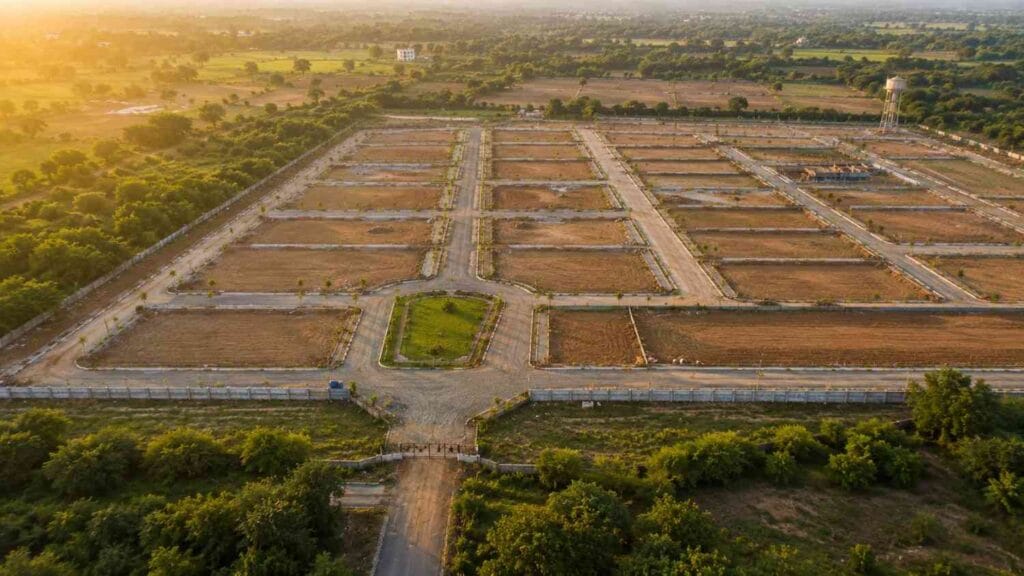
Charts (Data Tables for Visualization)
Factors Affecting Resale Value
| Factor | Relative Importance (1-10) |
|---|---|
| Legal Approvals | 10 |
| Location | 9 |
| Road Connectivity | 8 |
| Infrastructure Development | 8 |
| Neighborhood Growth | 7 |
| Plot Shape & Dimensions | 6 |
| Utility Availability | 6 |
| Gated Amenities | 5 |
Buyer Decision Matrix
| Criteria | Weight in Decision (%) |
|---|---|
| Legal Clarity | 25 |
| Location & Connectivity | 25 |
| Infrastructure Status | 20 |
| Price vs Market Comparison | 15 |
| Plot Features | 10 |
| Future Development Plans | 5 |
Infrastructure Importance
| Infrastructure Type | Importance Score (1-10) |
|---|---|
| Internal Roads | 9 |
| Drainage System | 9 |
| Water Supply | 8 |
| Electricity Connection | 8 |
| Streetlights | 6 |
| Boundary Walls | 5 |
Investment Priority Score
| Priority | Score (1-10) |
|---|---|
| Verified Legal Title | 10 |
| Growth Corridor Location | 9 |
| Reasonable Entry Price | 8 |
| Developer/Layout Reputation | 7 |
| Plot Shape & Size Fit | 6 |
Location Evaluation Matrix
| Location Attribute | Evaluation Score (1-10) |
|---|---|
| Distance to Employment Hub | 8 |
| Distance to Schools/Hospitals | 8 |
| Highway/Ring Road Access | 9 |
| Public Transport Access | 6 |
| Commercial Development Nearby | 7 |
Risk vs Potential Comparison
| Scenario | Risk Level | Long-Term Potential |
|---|---|---|
| Approved layout, developed infrastructure | Low | Moderate to High |
| Approved layout, infrastructure in progress | Moderate | High (if plans proceed on time) |
| Unapproved layout, developed infrastructure | High | Uncertain (financing risk) |
| Unapproved layout, no infrastructure | Very High | Low |
Frequently Asked Questions
1. What exactly determines a plot’s future resale value? A plot’s future resale value is shaped by a combination of factors rather than any single element. Location, road connectivity, legal approvals such as RERA and NMRDA registration, infrastructure development, plot shape and size, and overall demand in that micro-market all play a role together. No one factor guarantees strong resale value on its own — for instance, a plot in a great location with unclear legal title can still struggle to attract buyers. It’s important to evaluate all these elements together rather than focusing on just one, such as price or location alone, when assessing a plot’s long-term potential before making a purchase decision.
2. Can anyone accurately predict how much a plot’s value will increase? No credible professional can predict exact future prices or guarantee a specific percentage of appreciation. Real estate values depend on many variables — infrastructure timelines, government policy changes, broader economic conditions, and local demand-supply shifts — that can shift unexpectedly over time. What buyers can reasonably do is evaluate observable, present-day indicators like legal clarity, infrastructure progress, and neighborhood growth to make an informed decision. Anyone promising a guaranteed return or a specific appreciation percentage should be approached with caution, since genuine real estate growth is influenced by too many external factors to forecast with precision.
3. Why is RERA registration important for resale value? RERA registration provides legal transparency and accountability for a project, which builds confidence among future buyers and lenders. When a plot is part of a RERA-registered project, banks are generally more willing to offer home loans to prospective buyers, which widens the pool of people who can realistically purchase it later. Without RERA registration, a plot may still sell, but the process can be slower and more difficult, since financing becomes harder to arrange. This is why legal registration status is one of the first things a serious buyer or their advisor should verify before purchase.
4. What is NMRDA approval and why does it matter in Nagpur? NMRDA stands for the Nagpur Metropolitan Region Development Authority, which oversees planned development in and around Nagpur. Layout approval from NMRDA confirms that a residential layout has been sanctioned according to applicable zoning and development regulations. Plots within NMRDA-approved layouts are generally viewed as more legally secure, which supports easier resale and loan approval later. Buyers considering plots around Nagpur, including areas such as Wardha Road, Shankarpur, or Dongargaon, should specifically confirm this approval status rather than assuming it based on a broker’s verbal claim.
5. How much does plot shape actually affect resale value? Plot shape affects how efficiently the land can be used for construction, which in turn influences buyer interest at resale time. Regular, well-proportioned plots — whether square or rectangular — generally allow architects more flexibility in home design, making them easier to sell compared to irregular, narrow, or oddly angled plots. While shape alone won’t make or break a resale outcome, it consistently comes up as a preference among buyers and can affect how quickly a plot moves in the market, especially when compared against similarly priced but better-shaped alternatives nearby.
6. Are corner plots always a better investment than regular plots? Corner plots often carry a price premium due to their wider frontage, added ventilation, and greater design flexibility, and this preference frequently continues at resale time. However, “better investment” depends on more than plot position alone — a corner plot with unclear legal documents or in a poorly connected area may still underperform compared to a well-documented regular plot in a stronger location. Buyers should weigh corner-plot advantages alongside all other resale factors rather than assuming position alone secures a stronger return.
7. How important is infrastructure development within a layout? Infrastructure — internal roads, drainage, streetlights, and boundary demarcation — signals how seriously a layout is being developed and maintained. Buyers evaluating a plot should check both the current state of infrastructure and any documented timeline for pending work. Layouts where infrastructure has stalled for years without clear reasons can be a warning sign, since incomplete infrastructure often translates into slower resale interest and can even affect a buyer’s ability to secure construction approvals or utility connections later.
8. Should I buy a plot mainly for investment or for future self-use? This depends on your financial goals and life plans. If your primary aim is investment returns, you may prioritize factors like growth-corridor locations and entry pricing relative to comparable plots. If you’re planning to eventually build a home, livability factors — schools, hospitals, utilities, and connectivity — deserve equal or greater weight alongside resale considerations. Many buyers pursue a hybrid approach: buying with self-use in mind while still keeping an eye on the legal and structural factors that support resale value, in case circumstances change later.
9. What documents should I verify before buying a plot to protect resale value? At minimum, buyers should verify the title deed, RERA registration certificate, layout approval from the relevant authority such as NMRDA, and an Encumbrance Certificate confirming there are no pending loans or legal claims against the land. It’s also worth checking the 7/12 extract or equivalent land record and confirming there is no ongoing litigation tied to the property. These documents collectively establish that the plot has a clean legal history, which is one of the strongest supports for smooth resale down the line.
10. How can I tell if a neighborhood is likely to grow in the coming years? Look for practical, observable signs rather than relying on speculation. Visible construction activity on neighboring plots, the presence of operating schools or small markets nearby, ongoing or planned infrastructure projects such as road widening, and steady interest from other developers in the same micro-market are all reasonable indicators of growth momentum. It also helps to check official government or development authority plans for the region, since these often outline longer-term intentions for road, utility, and zoning development in specific areas.
11. Is buying a cheaper plot in an underdeveloped area a good long-term strategy? It can be, but it carries higher uncertainty. Underdeveloped areas sometimes see strong growth if infrastructure and demand materialize as expected, but there’s no guarantee those developments will proceed on the announced timeline, or at all. Buyers considering this route should treat it as a higher-risk, potentially higher-reward strategy and should be prepared to hold the plot for a longer period. It’s advisable to verify legal approvals carefully in such areas, since underdeveloped zones sometimes have less established documentation processes compared to more mature layouts.
12. Do I need professional help to evaluate a plot’s resale potential, or can I do it myself? Buyers can absolutely conduct much of this evaluation themselves by following a structured checklist covering legal documents, location research, infrastructure inspection, and price comparison. That said, professional consultants who work regularly in a specific micro-market often bring valuable, on-ground context — such as awareness of layouts with known legal issues or areas seeing genuine infrastructure progress — that isn’t always visible to an outside buyer. Many buyers choose to combine their own research with a professional second opinion before finalizing a decision.
Address: 4 th Floor, Lusin Tower, Wardha Road Nagpur, 440015
Phone: +0712 2222712 +919370159082
Website: https://bhumeshrealtors.com/
Email: digital.bhumesh@gmail.com contact@bhumeshrealtors.com
You tube link: https://www.youtube.com/@bhumeshrealtors5206
Instagram : https://www.instagram.com/bhumesh_realtors/
Twitter : https://x.com/BhumeshRealtors
Facebook : https://www.facebook.com/bhumeshrealtors/
Linked in : https://www.linkedin.com/company/bhumesh-realtors/



Comments are closed